Why Does a Recruiter Ask Where Else You’re Interviewing?
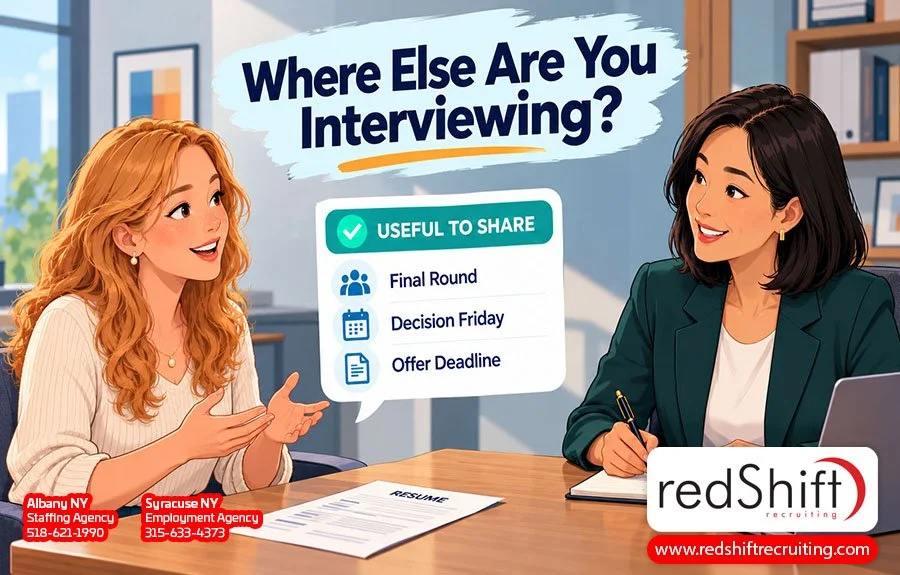
“Where else are you interviewing?”
For recruiters, it’s a common interview question, but it can catch job seekers off guard. Why does the recruiter need to know? Will having several interviews scheduled make you look more competitive? Could admitting you’re close to another offer hurt your chances? And do you have to name the companies you’re applying to?
With so much personal information being collected and shared today, it’s fair to question why someone wants to know something and what they plan to do with the answer.
So why does a recruiter ask where else you're interviewing? While you don't have to disclose every detail of your job search, recruiters have practical reasons for wanting to know where you stand. Understanding those reasons can help you share useful information, maintain reasonable boundaries, and build a more effective working relationship.
Why Do Recruiters Ask About Your Other Interviews?
Recruiters want to understand where you are in your search, what you’re looking for, and whether anything could affect the opportunity they’re discussing with you.
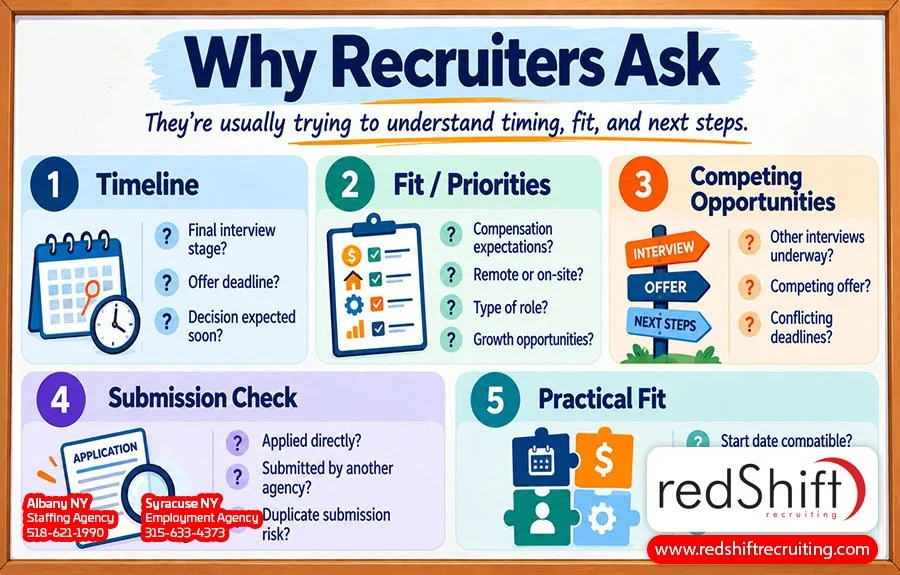
1. To Understand Your Job Search Timeline
Recruiters know that active job seekers may have applications pending with several employers. But there’s a big difference between submitting applications and actively interviewing with other employers.
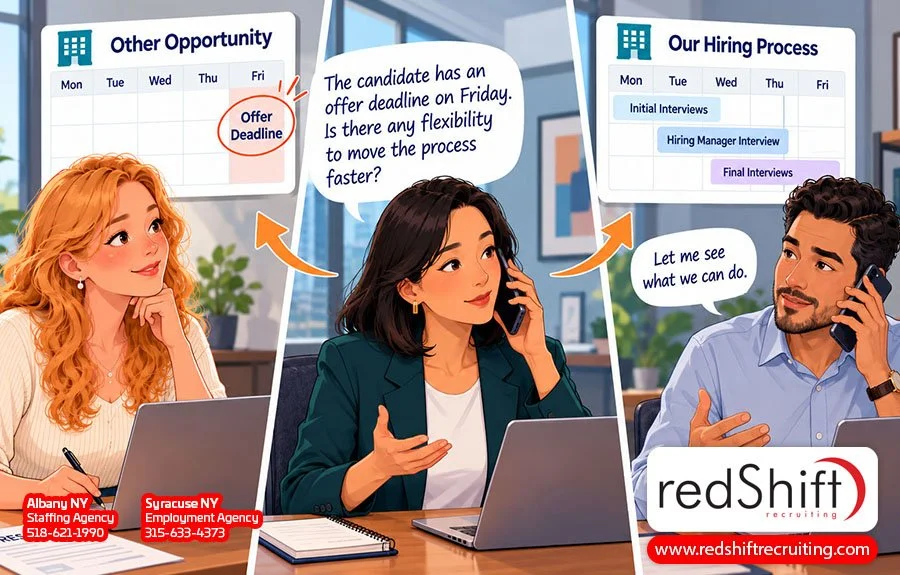
You might have several interviews lined up for next week, be approaching the final interview stage with another employer, or already have a job offer on the table. Each situation involves a different timeline. If you're close to making a decision, your recruiter may be able to communicate that urgency to the hiring manager and ask whether the employer can move faster. The stage of your other interviews usually matters more than how many you have or which companies you’re considering.
Employers can’t always speed up their hiring process, and they may not be ready to make an offer. But knowing you could soon be unavailable helps the recruiter manage expectations and potentially give you more options to consider.
2. To Understand Your Interest in the Position
Recruiters also want to understand how the position they're discussing fits into your broader job search. Are you pursuing similar positions, or applying to several different job titles? Are you specifically interested in this role, or is it one of several other positions you're exploring?
Your answer may prompt follow-up questions about the opportunities you're considering and what other firms are offering. If you're interviewing for several similarly appealing roles, a recruiter might want to know how they differ. For example, if another position offers remote work but the one they're discussing with you is entirely on-site, they may ask how important that flexibility is to you.
This helps the recruiter understand whether you're genuinely interested in the position, whether it's a great match, and what might influence your decision if you receive an offer.
3. To Discuss Competing Offers
Having interviews scheduled with other employers doesn't necessarily give you more negotiating power. But if you receive another offer, your recruiter may be able to use that information to advocate for better terms.
For example, if another employer has made a higher salary offer or included benefits that are important to you, the recruiter can ask their client whether there’s room to negotiate. Depending on the circumstances, that might mean higher pay, additional flexibility, or another adjustment that makes the position more competitive.
However, not every employer can or will improve their offer. Salary ranges may be fixed, budgets may be limited, or the employer may be considering other candidates. Even a strong candidate with multiple opportunities won't automatically have more leverage.
4. To Avoid Duplicate Submissions to Specific Companies
This is particularly important when you’re working with an external recruiter or staffing agency.
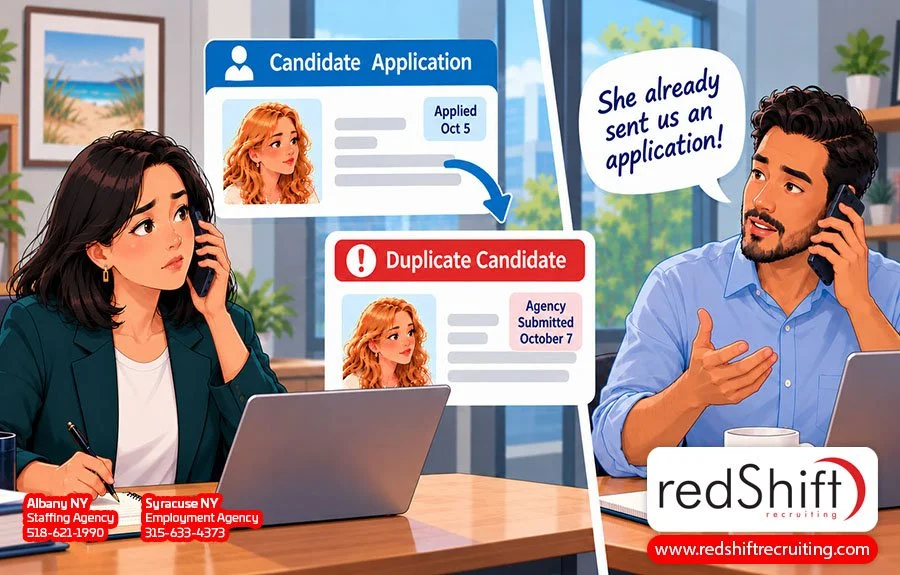
Suppose a recruiter contacts you about a position you’ve already applied for directly, or another agency has already submitted your resume to the same employer. Depending on the employer’s agreement with the agency, the recruiter may no longer be eligible to represent you for that opening or receive a placement fee if you’re hired.
This is important because agency recruiters often invest considerable time in sourcing, preparing, and representing candidates. Discovering late in the process that a candidate was already submitted can mean the recruiter is uncompensated for all that work.
To avoid these conflicts, an agency recruiter may therefore ask where you’ve applied to cross-check whether you’ve already been in contact with a particular employer. This generally doesn't prevent you from continuing through your original application or working with the recruiter on other opportunities; it simply helps avoid conflicts over who's representing you for that particular opening.
Why Might You Hesitate to Answer This Interview Question?
While recruiters usually have legitimate reasons for asking, it's understandable to be cautious about how much you share. These inquiries can feel like trick questions when you're unsure how your answer will affect your chances. If you say you're close to another offer, will the recruiter assume you're unavailable? Or will you seem less desirable if their client is the only company interviewing you? And could disclosing another company's compensation weaken your negotiating position?
These concerns aren't entirely unfounded. What you share can influence how a recruiter or potential employer proceeds, and sometimes in ways you might not expect. There's also a broader problem of transparency and trust. Employers don't always tell candidates how many other people they're interviewing, how close they are to a decision, or whether they're seriously considering them for an offer. And in turn, candidates who've experienced ghosting, withdrawn offers, or other frustrating hiring practices may be especially reluctant to share information.
Unfortunately, mistrust can become self-reinforcing on both sides. Candidates withhold information because they expect it to be used against them, while recruiters become more guarded because they expect candidates to be less than forthcoming. Communication breaks down, and the hiring process becomes more difficult for everyone.
Neither side has to give up its interests or its right to privacy. But both have a responsibility to communicate professionally and avoid deliberately misleading the other.
What Should You Tell a Recruiter, and What Can You Keep Private?
When an interviewer asks about your other opportunities, focus on the important factors that could directly affect the position you're discussing.
Information That’s Generally Worth Sharing
Stage of your other interviews: Whether you're just starting conversations, interviewing with several employers, or approaching the final stages with another company.
Types of opportunities you're pursuing: The job titles, industries, or kinds of work you're considering. This helps the recruiter understand what you're looking for without necessarily needing the names of every company.
Important deadlines: You're expecting a new job offer, have received one, or need to make a decision by a particular date.
Previous contact with the employer: You've already applied directly, interviewed, or been submitted by another agency.
Relevant differences between opportunities: Another position offers higher pay, remote work, a different schedule, or something else that could influence which opportunity you'd accept.
These details help the interviewer understand your situation, how their opportunity compares, and whether anything might affect your decision or availability.
Information You Can Generally Keep Private
You don’t automatically have to disclose:
Every company you’ve applied to
The names of specific companies you’re interviewing with
Every recruiter you’re working with
The names of the people you’re interviewing with
Specific details of unrelated applications or conversations
You can answer the interviewer's question without identifying every employer you're speaking with, provided you've established that it isn't the same company or opening your recruiter is considering you for. Simply answering with the types of positions you're considering, how far along you are in the interview process, and any approaching deadlines is usually enough.
There's also nothing wrong with sharing company names or discussing your other opportunities more openly, particularly if you have a good relationship with your recruiter. Share what you're comfortable with while making sure they have the information needed to represent you effectively.
The Difference Between Privacy and Dishonesty
There are plenty of ways to answer a recruiter's question without sharing details you'd rather keep private. What's important is to avoid giving them a deliberately misleading picture of your situation.
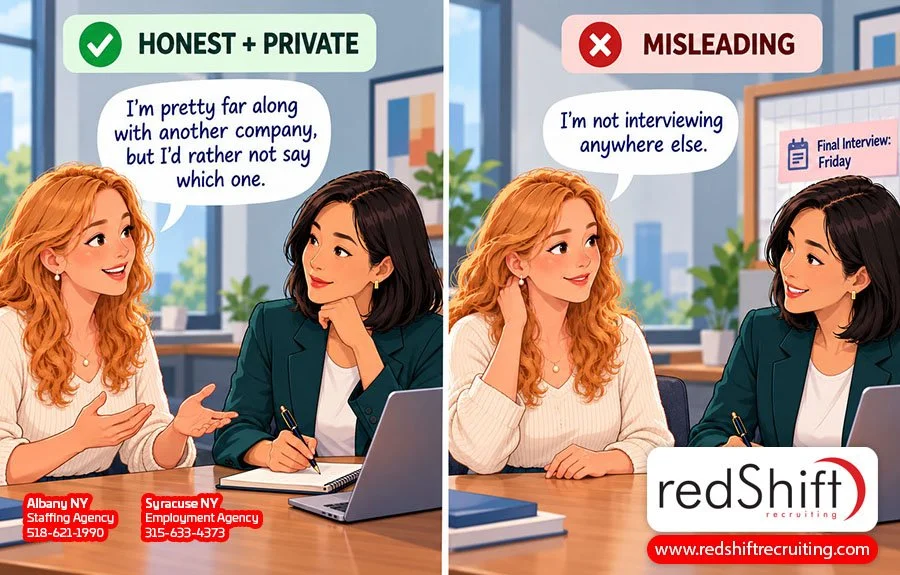
Consider these two responses:
“I’m pretty far along with another company, but I’d rather not share the name.”
“I’m not interviewing anywhere else.”
The first response protects your privacy while providing useful context. The second, if knowingly false, gives the recruiter an inaccurate impression of your circumstances.
You can decline to answer certain questions without inventing a different story. And if you genuinely don’t know when another employer will decide or whether you’ll receive an offer, it’s fine to say so.
Being honest doesn’t require telling everything. It does require being accurate about what you choose to share.
When Can Withholding Information Work Against You?
Keeping things general is usually fine, but concealing information that directly affects an opportunity or deliberately misrepresenting your circumstances can have real consequences.
The recruiter may not know about an important deadline. If you’re weighing another offer, they may be able to ask whether the employer can accelerate interviews or make a decision sooner. Without knowing about the deadline, they have no reason to try, and you may miss out on an opportunity.
You may miss a chance to negotiate. A competing offer can sometimes help a recruiter discuss salary flexibility or other terms. There's no guarantee the employer will improve its offer, but withholding that information may mean the conversation never happens.
Duplicate submissions can complicate your application. If you’ve already applied or been represented by another agency for the same position, disclosing that information early can help prevent confusion and avoid issues with your candidacy.
Dishonesty can damage valuable professional relationships. Inventing offers, inflating salaries, or making up deadlines might seem like a way to gain an advantage. But if a recruiter discovers you've deliberately misled them, it can seriously damage their trust in you and raise doubts about how truthful you've been in other conversations. A good recruiter can be an invaluable professional contact, offering advice, industry insight, and access to future employers long after your current job hunt ends. Damaging that relationship could cost you opportunities down the road.
Being selective about what you share is reasonable. But when important information is missing or inaccurate, your recruiter may not recognize potential problems until it's too late to address them, limiting their ability to advocate for you.
Can Sharing Information Affect Your Candidacy?
What you disclose can influence whether a recruiter or employer decides to move forward, but not always in the way you might think.
Suppose you have another offer that expires Friday, and you plan to accept it unless something else comes through first. The employer you're discussing, however, needs several more weeks to complete its interview process. Knowing they can't realistically finish evaluating you before your deadline, the recruiter or employer may decide not to pursue the opportunity.
Another employer, facing an urgent vacancy, might respond to the same information by moving you to the top of its interview schedule.
The same answer can produce different outcomes depending on the employer's circumstances, and you can't always predict how they'll respond. Being honest doesn't necessarily create a mismatch. Sometimes it simply reveals one sooner, saving everyone time on an opportunity that isn't likely to work out.
You can still make decisions in your own interests. You don't need to accept a weaker offer, abandon another opportunity, or keep interviewing for a job you have little interest in. Just keep your recruiter informed about circumstances that affect your willingness or ability to accept the position.
How Should You Answer When a Recruiter Asks About Other Job Interviews?
You don’t need a rehearsed script, but it helps to have a well-thought-out response. In a phone screen or job interview, you can simply explain where you are in your search and mention anything that could affect your availability or interest.
If this is your first and only job interview so far, there's no need to pretend otherwise. Maybe you've just started your job hunt, you're selectively applying, or you're actively exploring opportunities with a recruiter. You might also have been searching for months in a difficult job market without getting interviews. None of those situations automatically reflects your qualifications. Whether you're currently interviewing elsewhere isn't a reliable measure of whether you're the best candidate for a particular position. Could it affect how someone perceives your candidacy? Possibly, but inventing competition to look more desirable carries risks of its own.
Here are a few examples of how you might answer the question tactfully, depending on your situation:
| Your Situation | What You Could Say |
|---|---|
| You have a few interviews in progress. | “I've got a couple of interviews going. I'm in the final round with one company, and I should hear back by Friday.” |
| You have another offer. | “I do have another offer, and they need an answer by Friday. I'm still very interested in this position, though, and would seriously consider an offer from this company.” |
| You don't want to name the company. | “I'd rather not say which company, but it's a similar role, and I'm in the final round.” |
| You've already applied to the employer. | “Actually, I already applied there directly a few weeks ago. Would that be an issue?” |
| You have no other interviews. | “Not right now. I don't have anything else scheduled.” |
If you're uncomfortable sharing certain details, you can ask why they're needed or explain that you'd prefer to keep them private. And as your circumstances change, keep the recruiter updated. If you receive an offer with a deadline, accept another position, or decide to withdraw, let them know. That way, your recruiter can adjust their efforts and avoid pursuing opportunities you're no longer interested in.
Frequently Asked Questions
Does It Matter Whether You're Working With an Internal Recruiter or a Staffing Agency?
Both want to understand your availability, interest, and competing opportunities. An internal recruiter is generally focused on filling positions for one employer, so they're primarily interested in how your other interviews might affect your interest in or availability for that position.
A staffing agency recruiter may be considering you for several clients. In addition to understanding your preferences and timeline, they may place a particularly strong emphasis on where you've already applied or interviewed to avoid duplicate submissions that could affect their ability to represent you. This can be especially important when your skills are in demand and you're pursuing multiple opportunities.
What If a Recruiter Won't Tell Me Which Company They're Recruiting For?
Some staffing agencies don't disclose the client's name during the initial conversation, particularly for confidential searches. In these cases, the recruiter will usually provide a general description of the company, then identify the employer once the company expresses interest in interviewing you.
There are several reasons an employer's identity may be kept confidential early in the process, so it isn't necessarily a red flag. You can ask when the company's name will be shared, and you're free to decline an interview once you know who the employer is. Having your resume submitted doesn't obligate you to take the next step.
Why Should Candidates Be Honest When Employers Aren't Transparent?
Ghosting, misleading job advertisements, withdrawn offers, and other frustrating hiring practices are real concerns. It's understandable that candidates may question why they're expected to communicate openly when employers don't always do the same.
You can't control how an employer behaves, but you can protect your own professional reputation and avoid burning bridges that may prove valuable later. Being honest about your circumstances gives recruiters a better chance to advocate for you, address potential problems, and help you find other opportunities. Transparency is needed on both sides, and it starts with a willingness to communicate.
Should You Tell a Recruiter If Another Job Is Your First Choice?
Recruiters may ask how the position they're discussing compares with your other opportunities because they want to know how likely you are to accept an offer.
If another position is your first choice, there's nothing wrong with saying so. For example, if that job offers remote work and the current opportunity doesn't, your recruiter may be able to discuss flexibility with the employer. Or they may let the hiring manager know you're waiting on another opportunity you prefer so everyone has realistic expectations. Being open about your priorities gives the recruiter a chance to address concerns before they become obstacles.
Conclusion: Give Your Recruiter an Accurate Picture
When an recruiter asks which companies you're interviewing with, they're usually trying to understand how far along you are in your job search and whether your other opportunities could affect the hiring process. Sharing relevant information gives your recruiter a better chance to advocate for you, avoid unnecessary complications, and help both you and their client make informed decisions. You don't have to share every detail of your job search, but being forthcoming about relevant circumstances can make the process more effective for both of you.


Article Author:
Ashley Meyer
Digital Marketing Strategist
Albany, NY
from Career Blog: Resources for Building a Career - redShift Recruiting https://www.redshiftrecruiting.com/career-blog/why-does-a-recruiter-ask-where-else-youre-interviewing
via redShift Recruiting



Comments
Post a Comment