What Salary Should You Ask For?
You're halfway through your first call with a recruiter when they ask about your salary expectations. You've been deep in a job search, sending out application after application, and you can't remember the salary range listed in the posting. Even if you could, what number should you give?
Ask for too much, and you might price yourself out of the opportunity. Ask for too little, and you could leave money on the table. Adding to the confusion, a quick search can show very different salary estimates for the same job title.
What salary should you ask for? It's easy to see why many job seekers find this question nerve-wracking. But you don't have to guess. A little preparation can help you approach the conversation with confidence.
Why Do Employers Ask About Salary Expectations?
Employers ask the salary question to find out whether they can hire you within the budget for the role. Recognizing a significant gap early helps both sides avoid spending time on an opportunity that may not be a good fit. Recruiters may also use your answer to point you toward other openings that better fit your career goals.
Your first answer doesn't necessarily have to be your final one, but it can shape the salary conversations that follow. Doing some market research will help you choose a number based on what comparable jobs pay, where your qualifications place you within that range, and what you'd need to earn to make a change worthwhile.

How Do You Determine a Realistic Salary Expectation?
There’s no single formula that works for every job. Assess the market for the position, compare your qualifications with its requirements, and then determine what salary figure makes sense for your situation.
Research What Comparable Jobs Pay
Start by researching what similar jobs pay in your area. Salary research sites like Glassdoor, occupational wage data from the U.S. Bureau of Labor Statistics (BLS), and industry salary guides can all provide useful salary data.
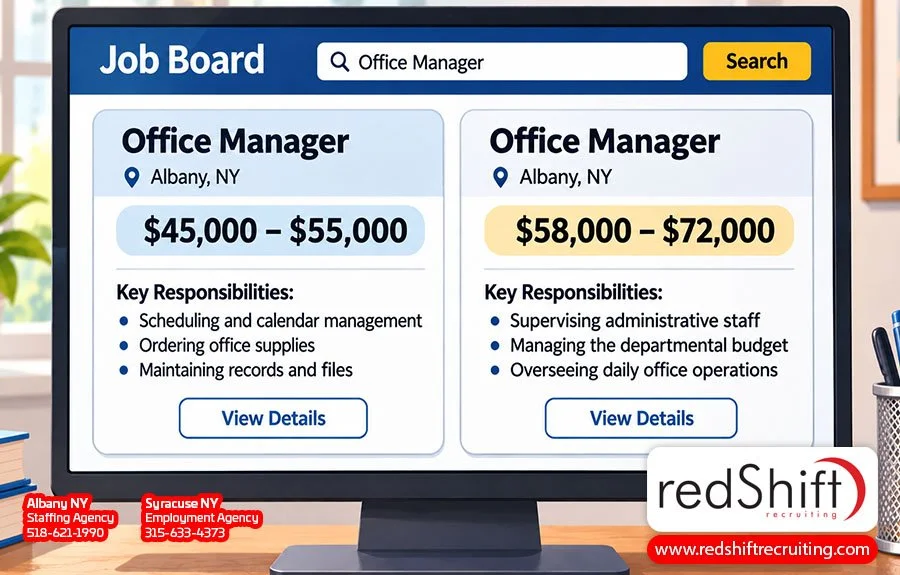
But don't rely on job titles alone. The same title can cover very different responsibilities depending on the employer, which can lead to significant pay differences. For example, an Office Manager at one company might coordinate schedules, order supplies, and maintain records. At another, the same title could involve supervising staff, managing budgets, and overseeing several departments.
When you search jobs online, look for average salary ranges from positions that are comparable in:
Responsibilities: Jobs involving comparable duties and levels of responsibility.
Seniority: Positions at a similar experience or career level.
Skills: Roles requiring similar qualifications or specialized knowledge.
Location: Jobs in the same or a comparable geographic labor market.
Industry: Similar positions within the same industry, particularly when industry affects compensation.
Compare several sources and look for consistent patterns instead of trusting one estimate or focusing on the highest salary figure you find. This gives you a better sense of current market rates and a starting point for determining where your qualifications might fit.
Assess Where Your Qualifications Fit Within the Range
Once you know what similar jobs pay, ask where your background reasonably places you within that range. Years of experience are important, but that number alone doesn't determine reasonable salary expectations. For example, someone with ten years of general administrative experience may be less competitive for a specialized executive support role than someone with fewer years of directly relevant experience.
Consider:
How closely your previous responsibilities match the job
Whether you have a degree, certifications, licenses, or a specialized skill set the employer needs
How much experience you have doing similar work in a specific industry
Whether you have relevant project management, technical, or supervisory experience
How much additional training you would need to be effective in the role
Demand for your skills can also influence your salary expectations. Employers may offer more competitive pay for qualifications that are in high demand, especially when few applicants have the necessary experience or expertise. Specialized AI skills, regulatory compliance expertise, in-depth industry knowledge, or other hard-to-find capabilities may increase your market value and earning potential in relevant positions.
Not every additional qualification justifies a higher salary, though. Companies may place more value on some skills and experience than others, depending on the position. When deciding where you fit within a salary range, focus on the qualifications you bring that are most relevant to the job.
Account for the Specific Job and Its Location
Even comparable positions can differ in ways that affect pay. A role involving employee supervision, major financial decisions, frequent travel, or irregular hours may justify a higher salary because of the added responsibility or demands on your time.
Location is another key factor. You may find significant differences in pay across regions depending on local demand for workers and the availability of qualified candidates. Salaries also tend to be higher in major cities, but the increase can be offset by a higher cost of living. In some cases, a smaller paycheck in a less expensive area may actually go further. If you're considering relocating, compare typical salaries and expected living expenses to get a better idea of how much money you'd have left after expenses.
Remote positions can be especially tricky to compare, as some employers base pay on where the employee lives, while others use broader regional or company-wide pay structures. Check whether the advertised salary applies to your location before using it to set your expectations.

Decide What Would Make the Job Worthwhile for You
A job can offer a reasonable salary and still be the wrong financial move for you. Suppose comparable positions pay $75,000–$85,000, but you currently earn $82,000, have excellent benefits, and live close to work. Considering the added costs of fewer benefits and a longer commute, you might need $90,000 to justify leaving your current job. The company isn't necessarily lowballing candidates; the opportunity at that pay rate may just not be worthwhile for you.
When comparing your current salary with a potential offer, think about what you'd gain, lose, or have to pay for yourself:
Medical benefits: Health insurance premiums, coverage, and out-of-pocket costs
Retirement contributions and additional benefits: Employer matching, contributions, and other financial perks
Paid time off: Holidays, sick leave, and vacation days that affect how much time you can take off without losing income
Commute and travel: Gas, tolls, parking, vehicle wear, and any new travel requirements
Schedule and flexibility: Remote work or flexible hours that could reduce transportation, childcare, or other expenses
Long-term considerations: Job stability, professional development, and advancement opportunities that could affect your future earnings
Also consider how much of the compensation is guaranteed. A position with lower base pay plus bonuses, commissions, or other incentives may be attractive, but those additional earnings aren't guaranteed. Check how they're calculated and whether advertised salary ranges include them. Some employers also offer one-time incentives, such as a signing bonus. That extra money can help in the short term, but it won't provide an ongoing increase in your paycheck.
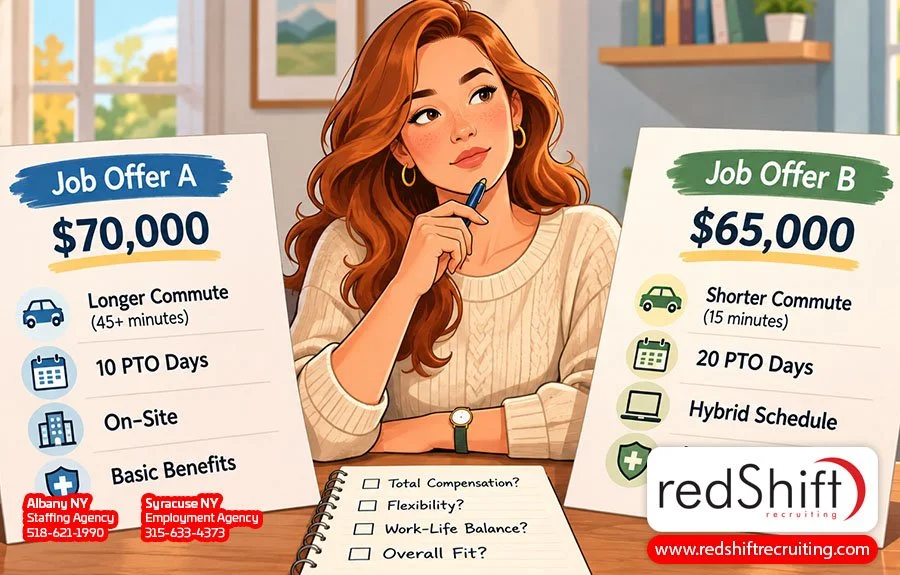
And of course, money isn't the only consideration. One person might prioritize flexible hours or hybrid work, while another values retirement contributions or health coverage. Compare the total compensation package, including financial and nonfinancial benefits, rather than base salary alone.
Your current pay can help you decide whether a move makes sense, but it doesn't determine what a future employer should offer. You could be underpaid, unusually well paid, or doing very different work than the position you're considering. What you need or want to earn isn't always what a particular market will support for your experience and qualifications. If there's a significant gap, you may need to reconsider the types of positions you're targeting or whether this is the right time to change jobs.
Choose a Salary Range You Could Realistically Accept
After reviewing the market, your qualifications, and your own needs, you should have a better idea of what to ask for. In initial conversations, it's usually smart to provide a range rather than one exact number, especially when you don't have all the details about the position or compensation package.
Keep your numbers focused and supported by your research. For most positions, a range of $5,000–$10,000 is a good starting point. An overly broad range can leave an employer unsure what you'd actually be willing to accept. If your expectations depend heavily on the responsibilities, benefits, or working arrangements, explain those factors instead of giving a much wider range.
Pay particular attention to the lower end. Your desired salary might be $80,000, but if you tell an employer you're looking for $75,000–$80,000, they may reasonably treat $75,000 as a possible starting point. The bottom of your range should be an amount you'd genuinely accept, based on what you know about the opportunity.
What If Your Salary Expectation Doesn’t Match the Employer’s Budget?
Even with careful research, your expected compensation may differ from what an employer is prepared to offer.
If your number is above their budget, the recruiter or hiring manager may tell you what the position pays and ask whether you'd consider a lower amount. Some employers have flexibility, especially for candidates whose qualifications are a strong match. Others have firm limits and may decide not to move forward if your expectations are too far apart.
You may not always know whether your salary expectations played a part in an employer's decision not to move forward. That's why basing your initial answer on realistic market research is usually better than choosing an inflated figure intended to leave room for negotiation.
If the employer's budget is lower than you'd hoped, you can ask whether there's any flexibility or discuss the overall compensation package before deciding whether the opportunity is still worth considering.
On the other hand, if you ask for less than an employer was prepared to pay, they may make a higher salary offer, but you shouldn't count on it. A realistic expectation helps protect you from pricing yourself out of opportunities or asking for less than an employer might otherwise be willing to offer.
How Should You Answer When Asked About Salary Expectations?
Your answer may depend on how much you know about the opportunity and where you are in the interview process.
During the early stages of a conversation with a staffing agency recruiter, you may not be discussing a specific job yet. The recruiter may ask this question early because they're considering you for several positions with different employers. Having a general salary expectation ready helps them identify which opportunities make sense for you.
You might say something like:
“I'm looking for something around $75,000–$80,000, depending on the responsibilities and overall compensation package.”
When discussing salary for a specific position, you can give a more precise expectation based on what you know about the job. If the job posting included a salary range, you can refer to it directly. If not, ask what the employer expects to pay before committing to a specific number.
You might say:
“I saw the posted range of $75,000–$90,000. Based on the responsibilities and my experience, I'd be looking for something around $85,000, depending on the compensation package.”
You don't need to negotiate salary in detail during an initial screening call. At that stage, you're mainly trying to establish whether the opportunity is a good fit, including whether the pay is realistic for you. But as the process moves forward, make sure you've discussed your expectations and asked about benefits or working conditions that could affect your decision. If you're working with a staffing agency, your recruiter can often get those answers and handle compensation discussions with the employer.
The salary negotiation process usually starts when you're approaching a formal job offer. By this point, you should have a clear idea of what you'd be willing to accept. Substantially raising your minimum after you've indicated a lower amount would work can complicate salary negotiation or cause an offer to fall through. If new information changes your expectations, let the recruiter or hiring manager know as soon as possible.
When you know what the job is worth in the market and what you'd need to make it worthwhile for you, it's much easier to answer the salary question with confidence.
Frequently Asked Questions
Should You Ask for the Top of a Posted Salary Range?
It depends on your qualifications. A posted range may cover candidates with different levels of experience and expertise. If you meet the basic requirements but lack experience in some areas, asking for the very top could make you less competitive against candidates with stronger qualifications or similar experience and lower salary expectations.
That doesn't mean you should automatically aim for the lower end. If you bring extensive relevant experience or specialized expertise, aiming for the higher end may make sense. Consider what you bring to the position and where your qualifications fit within the advertised range before deciding on a number.
Should You Ask for More Than You Currently Make?
It depends. Higher pay is a common reason to change jobs, but it isn't the only one. You may already earn more than similar positions typically pay, be changing careers, or be moving to a lower-paying area. A new job might also offer better benefits, more flexibility, or opportunities you value more than an immediate raise. Instead of adding a set percentage to your current salary, look at whether the overall opportunity is worthwhile for you.
Can a Recruiter Help You Decide What Salary to Ask For?
Yes. Recruiters who regularly fill similar positions often know current pay rates, which qualifications employers will pay more for, and how your experience compares with other candidates. They may also know what their clients are prepared to offer and whether there's room to negotiate. A career coach can help you think through broader career goals, but a recruiter can give more direct insight into salary expectations for positions they're actively filling.
Should You Use a Salary Calculator?
A salary calculator can be a good starting point, but its estimates depend on the data and assumptions behind it. One of the common mistakes job seekers make is treating a single estimate as a firm target. Before you settle on a number, check it against actual job postings, salary guides, and other sources first.
Conclusion: Finding a Salary That Makes Sense
So what salary should you ask for? There’s no universal number; the answer comes down to your own situation. Start with what comparable jobs pay, consider how your qualifications match the responsibilities, and weigh the full compensation package against what you need. Pay is only part of the picture: benefits, schedule, commute, and other factors can change what a job is really worth to you.
Do that research early in your job search, before a recruiter asks, and you’ll be able to answer with confidence. Give a range you’d actually accept, and update it if you learn something new about the role. The right number is one that’s competitive for your market and still works for your life.


Article Author:
Ashley Meyer
Digital Marketing Strategist
Albany, NY
from Career Blog: Resources for Building a Career - redShift Recruiting https://www.redshiftrecruiting.com/career-blog/what-salary-should-you-ask-for
via redShift Recruiting



Comments
Post a Comment