Trade School vs. College: Is a Four-Year Degree Still Worth It?
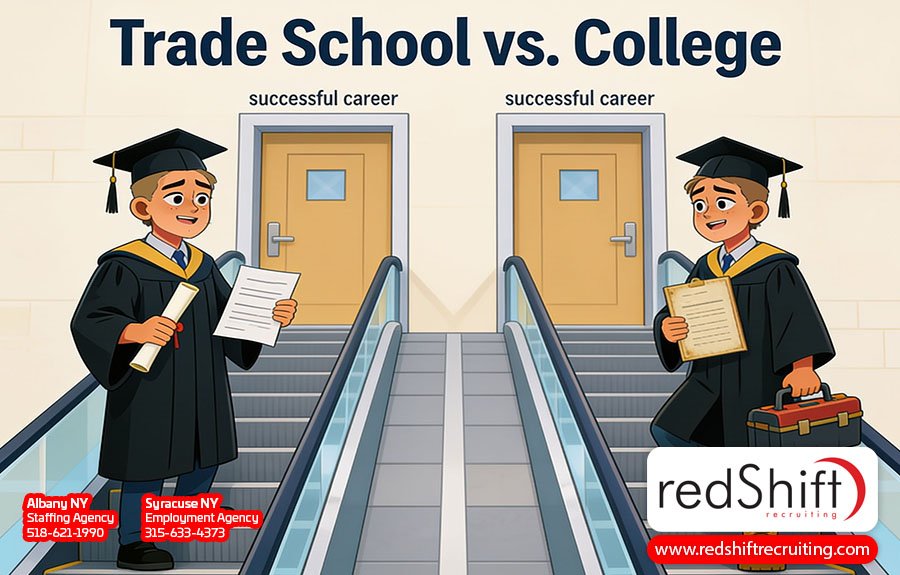
For generations, many students didn't ask whether they should go to college; they asked where they should go. Guidance counselors encouraged it. Parents saved for it. And many employers increasingly expected it. For many families, earning a four-year degree became synonymous with building a successful career and a better future.
Today, the conversation has expanded well beyond a simple trade school vs. college debate. Rising education costs, changing employer expectations, labor shortages, and rapid advances in AI are reshaping the workforce faster than many expected. At the same time, there has been renewed appreciation for the stability and earning potential of many skilled trades, along with growing recognition that practical skills, certifications, and relevant experience can be just as valuable as a traditional degree in many fields. As a result, more students and parents are looking beyond the traditional college path, weighing trade school, associate's degrees, certifications, apprenticeships, and other career-focused pathways alongside traditional four-year programs.
Ultimately, the real question isn't simply where you should go to school. It's whether the educational investment matches the career you're trying to build. In the sections that follow, we'll examine why the conversation around education is changing and how to evaluate the options available today.
Why Did College Become the Default Choice?
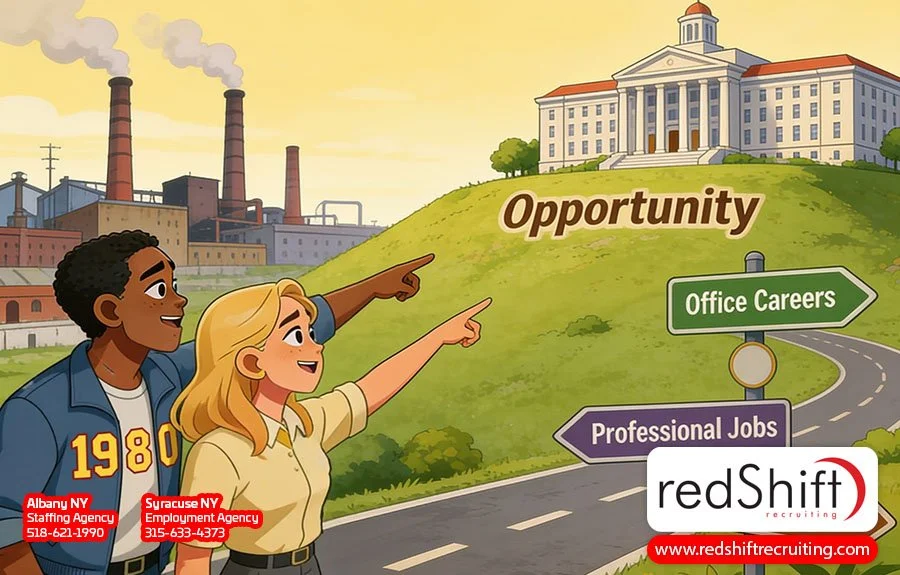
For the past several decades, earning a college degree was widely viewed as the clearest path to opportunity. As the economy shifted away from many manufacturing jobs and toward occupations where employers increasingly required bachelor's degrees, a college education became closely associated with career advancement, financial stability, and upward mobility.
For many families, attending college represented the opportunity to build a more comfortable life through work that was often perceived as more stable, more prestigious, or physically less demanding than other types of careers. Being "the first in a family to go to college" was counted as a major achievement, and many parents encouraged their kids to pursue college degrees. That advice reflected both the realities and the prevailing perceptions of the labor market at the time, and in many fields, college graduates did benefit from strong career opportunities and higher lifetime earning potential.
Fast forward to today, and the question becomes: Does the long-held assumption that college is the best choice still hold true? Educational decisions are shaped by the economy in which they're made, and even in just the past few years, AI and automation, demographic shifts, rising education costs, and persistent labor shortages have all reshaped hiring. Employers aren't abandoning degrees, but today's labor market increasingly rewards specialized skills, practical experience, and educational programs that build the skills employers are actively looking for.
Why Are More Students Reconsidering College?
The traditional advice to earn a bachelor's degree wasn't (and isn't) bad. It became the standard because it reflected labor market demands of the time. The problem is some of those demands have changed. Rather than assuming every four-year degree offers the same return on investment, students should carefully evaluate how different educational options prepare them for today's workforce.
Rising Education Costs Changed the Equation
For many families, one of the biggest factors in educational decisions is cost. College tuition has risen significantly over time, meaning that even with financial aid, many graduates leave school with substantial student debt that can take several years, or even decades, to pay off. While many college degrees continue to provide excellent long-term value, the return on investment can vary considerably depending on the degree program, career field, and employment opportunities it leads to. By comparison, trade school costs are often much lower, and many programs require less time to complete, allowing graduates to enter the workforce and begin earning sooner.
Students should also consider the opportunity cost of spending four or more years out of the workforce. In some fields, an associate degree or technical training program may allow graduates to begin earning sooner while continuing their education later if it supports their long-term goals. In some companies, employers may even offer financial assistance or tuition reimbursement for top employees to continue their education after hire, significantly reducing individual costs.
At the same time, a larger financial or time investment may be worthwhile if it prepares graduates for careers with strong long-term demand and earning potential. Many professions—including engineering, medicine, law, scientific research, and numerous other fields—still require a bachelor's degree or advanced education, making college the right investment for many students. The goal isn't simply to choose the least expensive or shortest educational path; it's to choose the one that best prepares you for the career you want to build. Comparing financial aid options, scholarship availability, expected debt, projected earnings, and the typical program length of different trade school and college options provides a much clearer picture of an educational investment than tuition alone.
Ultimately, before committing to any educational program, students should consider not only its cost, but also what occupations it prepares graduates to enter and what demand looks like for those careers. The value of an educational program isn't determined solely by the credential you earn; it's also determined by the career opportunities that credential creates.
The Labor Market Has Changed
While the costs of earning a degree have risen, the types of workers employers need have changed as well. Some of today's biggest hiring challenges involve occupations that require specialized technical skills rather than simply additional years of education. Fields such as healthcare, information technology, advanced manufacturing, and many skilled trades continue to experience hiring difficulties because employers often struggle to find qualified candidates with the right skills.
Many of these careers can be entered through an associate's degree, certificate program, apprenticeship, trade school, community college, or other forms of career-focused training. Regardless of where they went to school, employers are increasingly looking for candidates who can demonstrate marketable skills, hands-on training, and the ability to start contributing to their team quickly.
That's one reason educational ROI varies so much: two programs may require a similar investment of time and money, yet prepare graduates for occupations with very different hiring demand, salary potential, and long-term career opportunities. And increasingly, demand is being driven by specific skills—not simply by educational level.
AI Is Reshaping Entry-Level Work
Technology is changing entry-level work in many industries as AI automates certain routine, repetitive, and rules-based tasks. This allows employees to spend more time on work requiring judgment, communication, technical expertise, and problem-solving. However, it also changes what employers expect from entry-level hires.
In many organizations, routine tasks once assigned to new employees served as stepping stones for learning the job. As AI takes over some of that work—and as many employers continue operating with leaner teams—there are often fewer opportunities for significant on-the-job training. Instead, organizations increasingly look for candidates who can begin contributing more quickly, whether through internships, certifications, projects, apprenticeships, clinical rotations, or other forms of practical experience.
This doesn't mean entry-level jobs are disappearing or AI is replacing every worker. However, it does mean the skills employers expect from entry-level candidates are changing. Whether someone completes their formal education with a high school diploma, graduates from a traditional four-year college or technical program, or follows another educational pathway, combining technical knowledge, practical experience, strong communication skills, and an understanding of AI tools is becoming more valuable.
Employers Increasingly Hire for Demonstrated Capability
A degree tells employers what someone has studied, but it doesn't always show what they're able to do. While many college programs prepare students with valuable academic knowledge and critical thinkingskills, employers increasingly look for evidence that candidates can apply what they've learned in real-world situations.
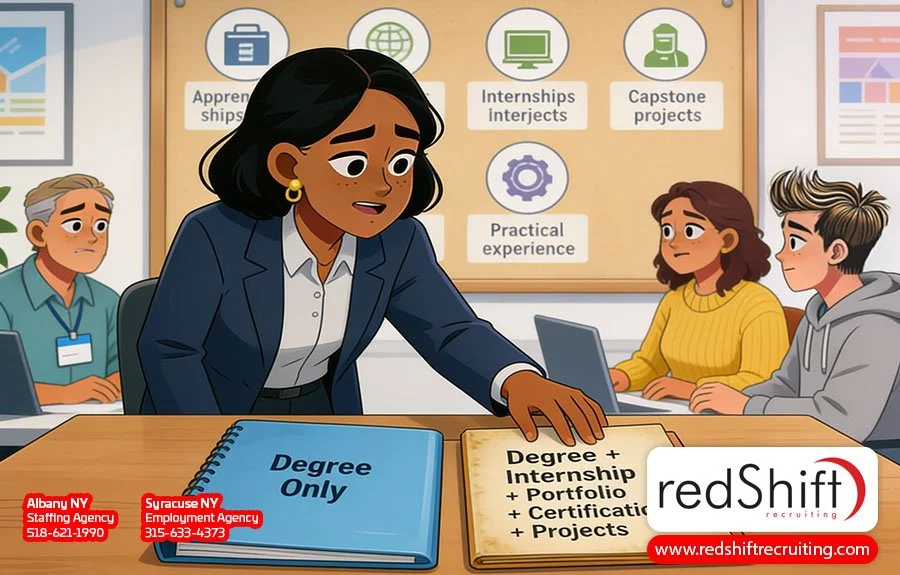
That evidence can take many forms, including internships, apprenticeships, clinical rotations, technical certificates, portfolios, capstone projects, research, or other forms of practical experience. Each can help candidates develop marketable skills while demonstrating communication, collaboration, adaptability, and other workplace abilities that are difficult to learn solely through coursework.
For many employers, seeing those experiences on a resume gives them greater confidence that a candidate is prepared for the realities of the workplace. Academic knowledge is still important, but organizations are placing a high value on applicants who have already demonstrated that they can succeed in professional environments—not just in the classroom.
What Are the Alternatives to a Four-Year Degree?
Education isn't a one-size-fits-all decision. Students have more options than ever before, and many successful careers are built by combining different types of education over time rather than following a single path from a high school diploma through a bachelor's degree.
Associate's Degrees
An associate degree can provide an efficient path into many in-demand careers. Programs in fields such as network administration, radiologic technology, medical laboratory technology, engineering technology, and accounting combine classroom instruction with practical application, allowing graduates to begin working sooner than many bachelor's degree candidates.
Additionally, associate's degrees often provide flexibility. Many students begin at a community college, complete general education courses at a lower cost, and later use transfer credits toward a bachelor's degree program. Others enter the workforce first and decide whether to continue their education later as their careers develop.
Skilled Trade School Programs
Not every student wants or needs the traditional four-year college path. Careers such as electrician, HVAC technician, plumber, industrial maintenance technician, and CNC machinist offer challenging, hands-on work that combines technical expertise with practical problem-solving.
For many years, one reason parents encouraged their children to pursue college was the perception that white-collar careers generally offered a higher standard of living than blue-collar work. While that may have reflected the realities of the labor market for many occupations at the time, today's picture is more nuanced. Many skilled trades offer strong job security and excellent earning potential. In certain occupations, the median annual wage can equal or even exceed some careers that require a bachelor's degree, and ongoing labor shortages in many skilled trades continue to create strong demand for qualified workers. These careers require significant technical knowledge, ongoing learning, and problem-solving skills, making them far more specialized than outdated stereotypes sometimes suggest.
Preparing for trade school jobs often looks different from preparing for traditional white-collar professions. Many trade schools focus on building specialized skills through intensive hands-on training, helping students gain practical experience directly applicable to their future careers. And because vocational schools often offer shorter programs that typically take one to two years to complete, students can also enter the workforce more quickly and begin earning while continuing to build their skills.
Certifications and Technical Credentials
Degrees are no longer the only way to demonstrate expertise. Industry-recognized certifications in specializations such as cloud computing, cybersecurity, CAD, healthcare, and project management allow professionals to build additional skills throughout their careers while keeping pace with changing technologies and industry practices.
Rather than replacing degrees, certifications often complement them. A bachelor's or associate's degree paired with a relevant certification combines foundational education with current technical expertise. In some areas of information technology and other technical fields, employers may place as much value on relevant experience and industry-recognized certifications as they do on a bachelor's degree. Trade school credentials often prepare students to earn industry-recognized certifications or licenses in fields such as welding, HVAC, electrical work, automotive technology, or commercial driving, providing employers with additional confidence in a candidate's job-specific knowledge and technical competency.
Hybrid Pathways
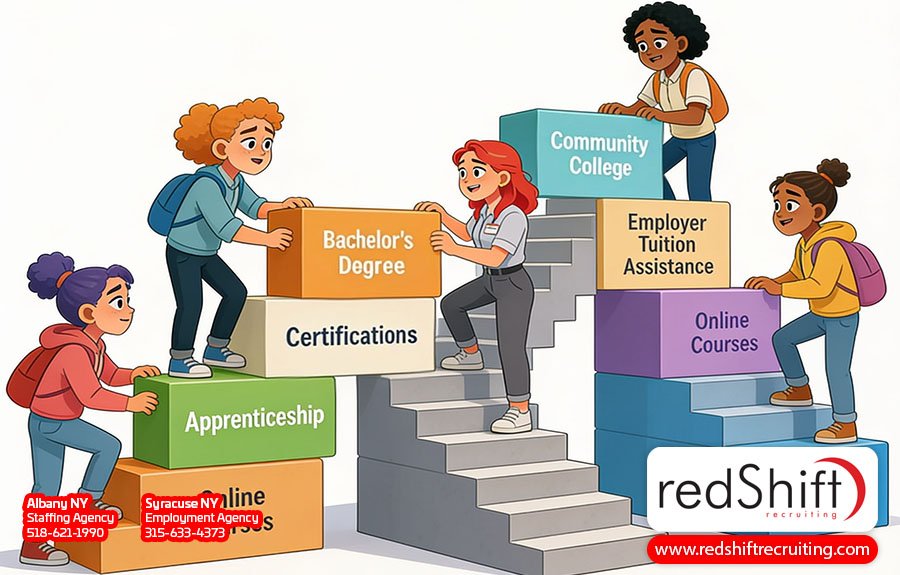
Education is also becoming increasingly modular. Students no longer have to make one educational decision at age eighteen that determines the rest of their career. Instead, they can choose from a range of educational pathways based on their career goals, interests, and learning style. This approach can reduce the upfront time commitment of education, allow students to begin earning sooner, and make it easier to pursue a new career path or continue developing new skills.
As technology, industries, and workforce needs continue to evolve, continuous learning has become an increasingly important part of a successful career. As a result, educational journeys often look very different today than they did fifty years ago. Instead of going straight from high school to college and ending their education there, a professional might begin with an associate's degree, enter the workforce, receive employer tuition assistance to complete a bachelor's degree, and later earn a relevant certification while working full-time. Learning increasingly becomes an ongoing process rather than something completed before a career begins.
How Do You Choose the Right Educational Path?
Instead of focusing on the trade school vs. college discussion, the better question to ask is which educational path is the best investment based on the career you want to build and the realities of the current job market.
For some prospective students, a four-year college degree will still be the right choice. Many professions in fields like medicine, engineering, law, science, and education continue to require bachelor's or advanced degrees. College students also typically have access to valuable networking opportunities, internships, research experiences, leadership development, and extracurricular activities that contribute to both professional and personal growth. Additionally, college graduates can have more career flexibility than trade school graduates who train for a specific vocation.
On the other hand, if you enjoy hands-on work, solving practical problems, and seeing the tangible results of your efforts, trade school programs may be an excellent choice. Many of these careers are in high demand, require a significantly lower financial investment, and offer average salaries as high or higher than some roles requiring four-year degrees. Additionally, many skilled trade jobs offer strong job security and can be more resilient during economic downturns because they involve essential services that cannot easily be outsourced or delayed.
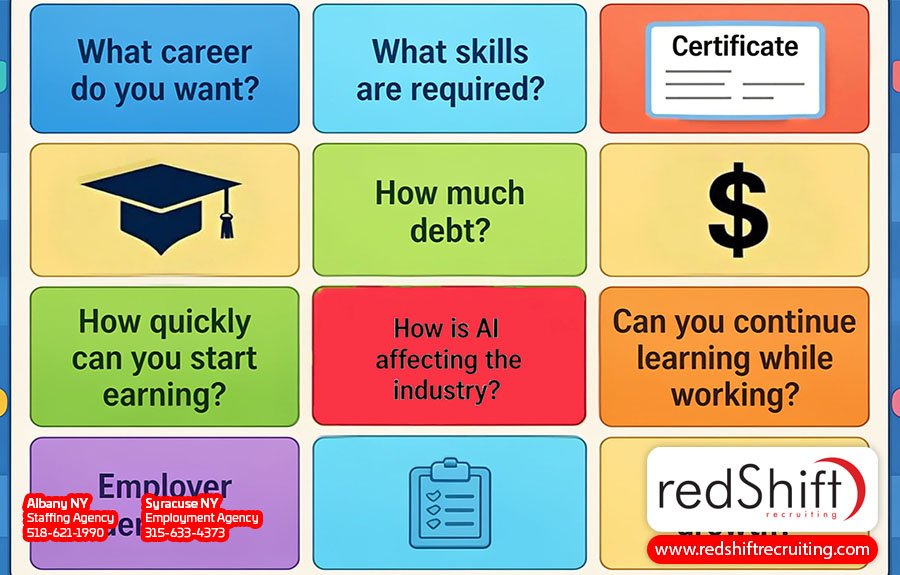
Instead of comparing schools, compare careers. Publicly available labor statistics, career outcome reports, and resources from career centers or organizations such as the National Association of Colleges and Employers can help you assess various roles rather than relying on outdated assumptions. Whether you're considering becoming a software developer, a construction manager, a radiologic technologist, an accountant, or an electrician, start by asking:
What education or training is actually required?
How strong are the long-term job opportunities?
What will the education cost, and how much student debt could I graduate with?
How quickly can I begin working?
What do graduates typically earn a few years into their careers?
Will the educational program give me practical skill-building opportunities that can be applied in the real world?
Can I continue building new skills and credentials while working?
For most students, the right decision won't be determined by tradition or prestige. It will come from choosing the educational pathway that best prepares them for the future they want to build.
Frequently Asked Questions
Trade School vs. College: Which Is Better for Today's Job Market?
There isn't a single answer to the trade school vs. college debate because the right choice depends on your personal career goals. Some professions require a bachelor's degree, while others can be entered through trade school programs, apprenticeships, or with specialized certifications. Both college and trade school graduates earn competitive salaries, depending on their specialization, and both offer training for rewarding career paths. Rather than comparing career schoolswith universities, start by determining the education required for the career you want, the current job market, long-term demand, earning potential, and opportunities for advancement.
Can You Start Your Career Without a Four-Year Degree?
Absolutely. Many careers can be entered with a high school diploma, an associate's degree, relevant industry certifications, or after completing a trade program. Vocational college and trade school students typically take one to two years (or even less) to complete their education and are often job-ready sooner than college graduates, who usually require four years to complete their bachelor's degree. Some professionals later return to school, while others continue building their skills through additional certifications. For many people, education is no longer a one-time decision but an ongoing process that evolves with their career.
How Can You Tell Whether an Educational Program Is Worth the Investment?
A strong high school transcript can get you into the best schools, but choosing the right educational investment requires looking beyond school rankings. Rather than focusing only on the school’s reputation, compare the career outcomes. Research hiring demand, expected earnings, advancement opportunities, and the education employers typically require. Speaking with employers, reviewing labor statistics, and using resources from the National Association of Colleges and Employers or your school's career centers can help you make a more informed decision.
How Do Technical Schools, Career Schools, and Vocational Colleges Differ?
Technical schools, career schools, and vocational colleges are referred to interchangeably, although there can be subtle differences. In general, career schools and vocational programs prepare students for specific occupations through career-focused, hands-on instruction, while technical schools often emphasize technology-based or highly technical fields such as information technology, engineering technology, or advanced manufacturing.
How Do You Choose the Best Program?
Before choosing any traditional college or trade school program or starting the admissions process, prospective students should first identify the career they want to pursue and then compare employment outcomes, earning potential, costs, and job growth.Once you pick a career that feels right for you, determine the education you need to qualify and then start assessing specific institutions. Take advantage of the resources available through career centers to help you assess your options. Making an informed decision before you apply can help ensure your educational investment supports the future you want.
Conclusion: Choosing the Path That's Right for You
There has never been a single educational path that's right for everyone. Whether you choose a four-year college, an associate's degree, a trade school, or another form of specialized training, the most important question is whether that education prepares you for the career you want and the opportunities available in today's workforce.
Rather than asking which type of school is "better," focus on finding the educational investment that aligns with your goals, fits your circumstances, and provides the comprehensive knowledge, skills, and experience needed to build a rewarding long-term career. The right choice isn't about public vs. private schools or college vs. trade school—it's about building the foundation you need to achieve your goals.

Article Author:
Ashley Meyer
Digital Marketing Strategist
Albany, NY
from Career Blog: Resources for Building a Career - redShift Recruiting https://www.redshiftrecruiting.com/career-blog/trade-school-vs-college
via redShift Recruiting



Comments
Post a Comment