Why Salaries Are Rising for Some Entry-Level Jobs: Higher Pay, Higher Bar
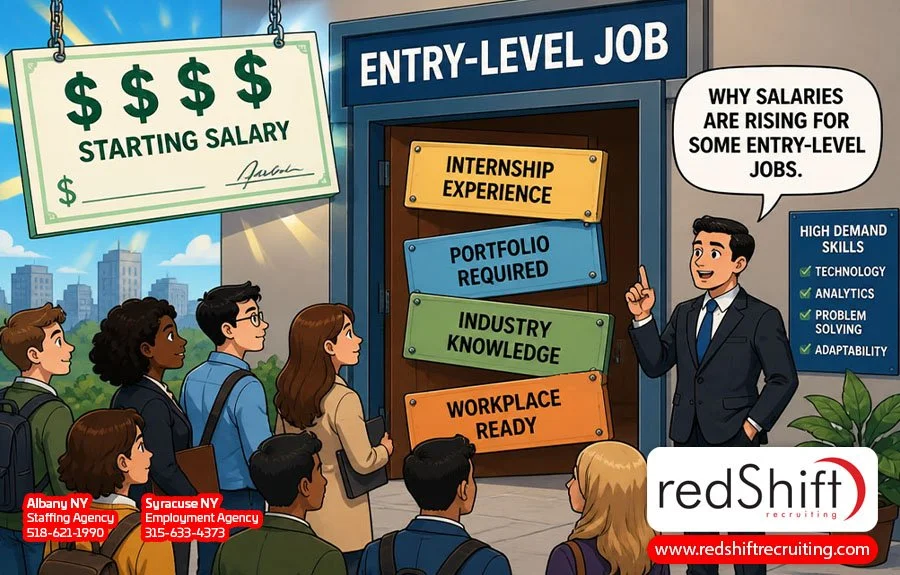
If you've been watching job market trends, you may have noticed something that seems like good news: in some industries, starting salaries for certain entry-level positions are going up. For new grads, career changers, and anyone navigating a job search, a higher paycheck is an obvious win. It means more flexibility, financial stability, and a stronger foundation for career advancement down the road.
But not everyone benefits equally from these rising entry-level wages. In some cases, employers are paying more while simultaneously narrowing the pool of candidates they're willing to consider. For those trying to find jobs in today's market, understanding why is an important part of assessing the challenges facing the entry-level workforce.
Why Some Entry-Level Salaries Are Rising
There is no single explanation for why salaries are rising for some entry-level jobs and not others. Compensation is shaped by a range of economic and labor market forces, and what's happening in one occupation can look very different from what's happening in another. Several factors are contributing at once.
Inflation, Cost of Living, and Wage Growth
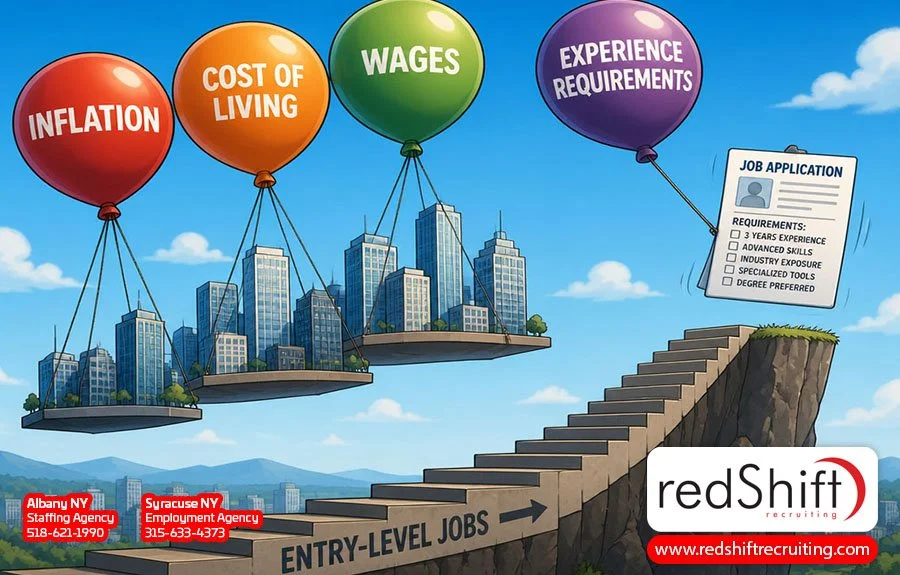
One of the most straightforward factors is inflation. As housing, transportation, healthcare, and everyday expenses increase, workers need higher pay to maintain the same standard of living. This creates pressure on entry-level wages across industries, as companies adjust salary ranges to stay competitive and help employees manage the rising cost of living.
Notably, the federal minimum wage has remained unchanged since 2009, the largest stretch in decades. In the absence of federal legislation, many states have passed minimum wage increases over the last few years, pushing the floor higher in much of the country. While higher minimum wage laws primarily affect lower-wage roles, they can sometimes create upward pressure on an organization's pay structure when meaningful compensation differences are maintained between positions. The result is that the average entry-level salary in many fields has moved upward partly in response to broader economic conditions and living wage conversations.
Research suggests this trend is continuing. The National Association of Colleges and Employers' (NACE) Winter 2026 Salary Survey found that nearly every major category of bachelor's degree saw projected salary increases, ranging from 3.1% for engineering to 6.9% for computer sciences, demonstrating rising compensation for early-career professionals in a range of industries. These economic factors help explain part of the salary story, but they do not explain why some employers appear willing to pay a premium for certain entry-level candidates. For that, we need to look at the labor market itself.
Talent Shortages in Certain Fields
Not every industry faces the same conditions. While some sectors have experienced layoffs or slowdowns, others continue to struggle with genuine shortages of qualified workers. Specialized roles in fields such as skilled manufacturing, accounting and finance, healthcare support, and certain trades remain difficult to fill across much of the country. These shortages stem from different root causes: for example, manufacturing's skills gap is closely tied to retiring veteran workers and evolving technology, while accounting's shortage is driven more by a shrinking pipeline of new graduates entering the field at all.
This doesn't only affect experienced professionals; they influence entry-level roles too. Staff accountants, manufacturing technicians, help desk professionals, and other early-career positions may be seeing stronger salary growth simply because there aren't enough candidates to go around. When employers compete for a limited supply of qualified people, compensation goes up. In these cases, higher pay reflects scarcity, not necessarily a change in the work itself.
For job seekers in high-demand fields, this is genuinely good news. A job offer in one of these fields can represent real long-term benefits—not just a better starting point, but a valuable career path.
The Experience Premium
Inflation and talent shortages are all factors that affect rising salaries, but there may be another factor that gets less attention: in some roles, what employers mean by "entry-level" has quietly changed.
Employers in many industries are working with leaner teams than a decade ago, leaving experienced managers with less time to train new hires the way they once did. Compounding this, much of the routine work that's increasingly handled by AI and automation, such as basic data entry, routine reporting, and first-pass customer service, wasn't just busywork. It often doubled as informal training, giving new employees lower-stakes opportunities to build both technical skills and the soft skills (communication, judgment, prioritization) that typically come from hands-on repetition and observation rather than instruction. As that early, lower-stakes work is increasingly automated, there's less natural runway for new hires to develop those skills on the job, and the remaining work often requires more judgment and independent skill from the first day. That means for companies under pressure to fill positions quickly and maintain productivity, priority often goes to candidates who can contribute immediately with minimal onboarding.
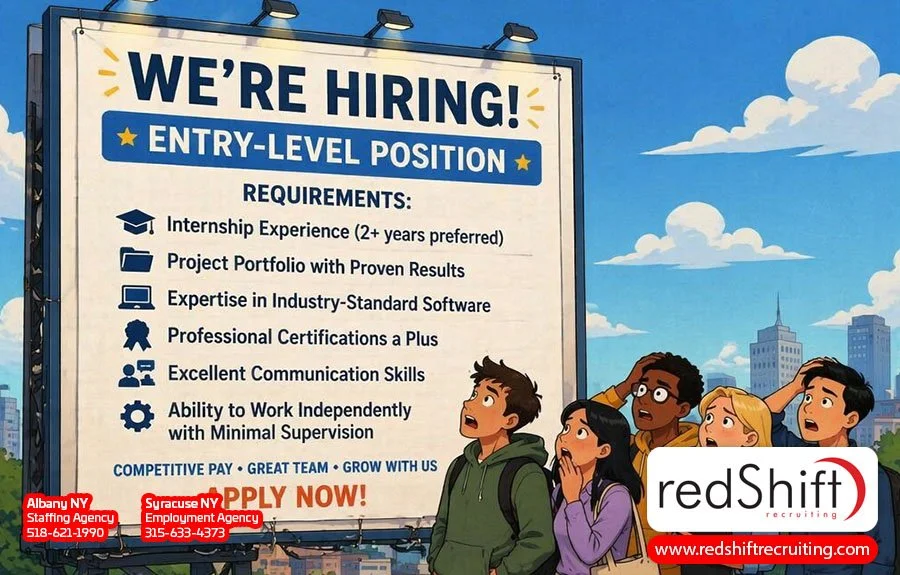
The result is that some roles still labeled entry-level positions are increasingly seeking candidates with qualifications that would have looked like early-career experience a decade ago: internships, portfolios, relevant certifications, technical projects, or demonstrated hands-on experience. Although once sufficient for many entry-level roles, a high school diploma or college degree alone may no longer be enough to compete for some of these higher-paying jobs.
This gives us new context as we consider the potential reasons behind rising entry-level salaries: in some cases, it doesn't mean employers are paying more for the same candidate profile. They're paying more for a more advanced one. In some roles, the average starting salary may be going up partly because the expectations attached to it are going up too.
Who Is Actually Getting These Jobs?
If employers are paying more for some entry-level positions, who is getting those opportunities? In most cases, it isn't simply the job applicant with the strongest education credentials; it's the one who can demonstrate some degree of workplace readiness before they're hired.
For example, a college graduate who has completed an internship may enter the workforce already familiar with professional systems and workflows. An aspiring IT professional who has built technical skills through certifications and hands-on projects will typically stand out from someone whose experience is limited to coursework. In manufacturing, apprenticeships and equipment experience help candidates demonstrate comfort with the environment. And career changers often build credibility through portfolios, freelance work, or volunteer projects.
While employers have always preferred candidates with relevant experience, what's changed is how often that preference now functions as a baseline requirement rather than a competitive edge. Gaining experience before being hired, once a way to stand out, is increasingly a prerequisite for entry-level employment in some fields.
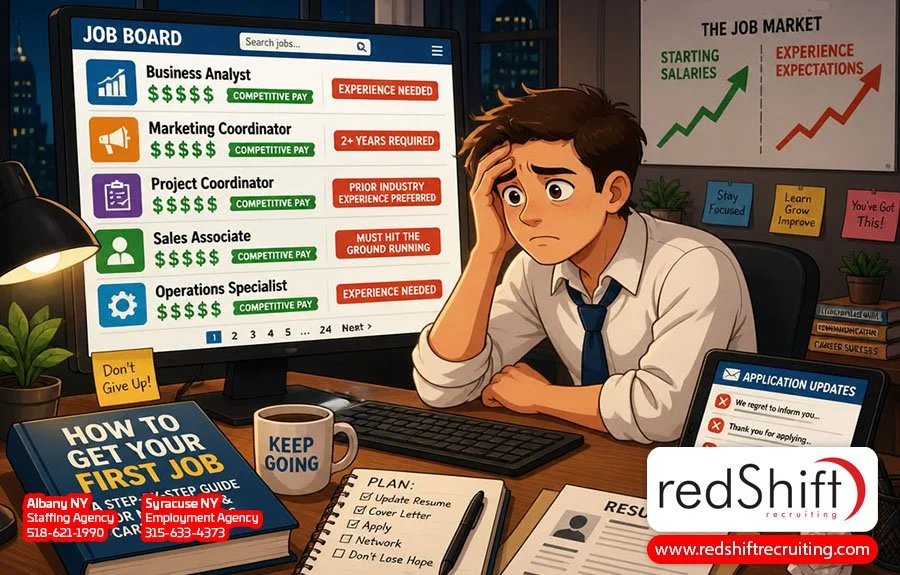
This is also why new grads entering the workforce may find the job search disorienting. The pay looks attractive. The title says entry-level. But the actual opportunity may be less accessible than it appears because the role itself has evolved.
What This Means for Job Seekers
For entry-level workers and college graduates seeing strong starting salaries or hearing about talent shortages, it's natural to assume that breaking into the workforce should be getting easier. And in some occupations, it is. But in others, the picture is more complicated.
The jobs offering the highest income at the entry level are often the ones with the most specific expectations. That doesn't have to be a reason for discouragement, but it is a reason for strategy. Job seekers who understand this dynamic are better positioned to focus on where their background is genuinely competitive, and to build the skills needed in areas where they have gaps.
Reframing how you evaluate opportunities in the first place will also help you make more informed decisions in a market where compensation is just one of many considerations. When salaries are rising fast in a given field, it's tempting to prioritize your first job offers by the highest number, or to more heavily weigh perks like a shorter work week, additional vacation time, or other benefits. While those are all valuable factors to consider, for early-career candidates they shouldn't always be the primary filter. In some cases, even a role at the lowest rate may offer more long-term value if it provides opportunities to learn new technologies, be mentored by an experienced manager, or obtain clear advancement opportunities. Jobs that support your long-term career path will often deliver more money and better options down the road than one chosen primarily for its starting paycheck.
Volunteer work, capstone projects, freelance assignments, and industry certifications can all help candidates demonstrate readiness for full-time employment, even if they don't have formal work experience. The long-term benefits of building these skills early often go beyond higher entry-level wages, laying the foundation for career advancement and financial stability over time.
It's also important to recognize where the true barriers are. In some occupations, what looks like an entry-level opportunity is actually closer to an early-career role, and the most productive response isn't to get frustrated, but to identify the specific gap and address it directly.
What This Means for Employers
For employers, this trend raises a question worth thinking about: if organizations increasingly prefer candidates who already possess workplace-ready technical skills, where will those candidates come from in the future?
The experienced professionals companies rely on today often began their careers in roles that provided training, mentorship, and time to develop. When fewer organizations invest in developing new talent—and when entry-level positions increasingly function as early-career roles—the pipeline of qualified candidates narrows over time. That's not a theoretical concern; it's a dynamic already visible in some of the fields where talent shortages are the most acute.
Hiring for immediate productivity is a rational short-term response to real constraints. But organizations that also invest in employees with high potential—even those who need some development time—tend to build deeper institutional loyalty and reduce the long-term costs of turnover and repeated hiring. In some fields, today's talent shortages are compounded by years of reduced investment in entry-level training—a pattern that could have lasting consequences for future talent pipelines.
Frequently Asked Questions
What Is the Average Entry-Level Salary Right Now?
The average entry-level salary varies significantly by field, local economy, and region. According to recent projections from the National Association of Colleges and Employers, starting salaries are expected to rise across many majors. Fields with talent shortages, including accounting, manufacturing, skilled trades, and certain healthcare roles, often post the strongest entry-level wages. For the most current labor statistics by occupation, the Bureau of Labor Statistics is the most reliable source.
Why Are Entry-Level Jobs Requiring So Much Experience?
Several forces are contributing. Leaner teams mean less capacity for on-the-job training. AI is handling tasks that once gave entry-level workers a chance to learn on the job, raising the bar for what's expected from day one. And employers under pressure to fill roles quickly and maintain productivity increasingly prioritize candidates who require minimal onboarding. The result is that entry-level positions in some fields may require early-career qualifications rather than true beginner experience.
Does a College Degree Still Matter for Entry-Level Jobs?
A college degree remains relevant in many fields, and in some occupations, a degree is still a basic requirement for employment. However, in others, demonstrated technical skills, certifications, and hands-on experience can carry equal or greater weight. New grads are often most competitive when their education is paired with internships, projects, or other evidence of workplace readiness.
How Does the Minimum Wage Affect Entry-Level Salaries?
The federal minimum wage has not changed since 2009, when it was last set at $7.25 per hour under the Fair Labor Standards Act. In the absence of federal action, many states have passed their own minimum wage increases, pushing entry-level wages higher in much of the country. These changes most directly affect lower-wage positions, but they also create upward pressure throughout an organization's compensation structure. In some cases, higher minimum wage laws have contributed to broader wage growth and average starting salary figures even in experienced roles.
Is It Harder to Get an Entry-Level Job Now Than It Was Before?
It depends heavily on the field. In occupations facing genuine talent shortages, job seekers with the right skills may find the market quite favorable. In fields with a surplus of candidates chasing a limited number of openings, the job search can be significantly more competitive. Understanding which dynamic applies to your target field will help you better prepare.
What Can I Do to Compete for Higher-Paying Entry-Level Roles?
Focus on demonstrating workplace readiness in concrete terms. Internships, apprenticeships, freelance or volunteer work, and industry certifications can all help candidates stand out, even without extensive formal work history. Portfolios and project work are particularly useful in fields where output can be shown directly. If you feel like you're struggling to make ends meet, consider where temporary, contract, or temp-to-hire opportunities in your field are realistic bridges while you're building toward a full-time job offer.
Conclusion: Looking Beyond Salary Alone
For aspiring professionals in the right fields with the right preparation, rising entry-level salaries represent a genuine opportunity. However, in some occupations, stronger compensation can be part of a shift in what employers are actually looking for, and the job seekers best positioned to capture those gains are those who have already done the work of building workplace-ready skills before they're hired.
For entry-level workers trying to navigate this market, a thoughtful career plan focused on gaining experience, targeting fields where your background is competitive, and prioritizing roles that build skills over those that simply offer the highest starting number is more likely to produce financial stability and lasting career advancement than chasing high compensation alone. And for employers, the same dynamic that makes experienced candidates so attractive today is quietly creating the talent shortage of tomorrow. Investing in people with potential, not just people who are already polished, is how organizations stay ahead of that curve.


Article Author:
Ashley Meyer
Digital Marketing Strategist
Albany, NY
from Career Blog: Resources for Building a Career - redShift Recruiting https://www.redshiftrecruiting.com/career-blog/why-salaries-are-rising-for-some-entry-level-jobs
via redShift Recruiting



Comments
Post a Comment