The Missing Link in the Entry-Level Pipeline
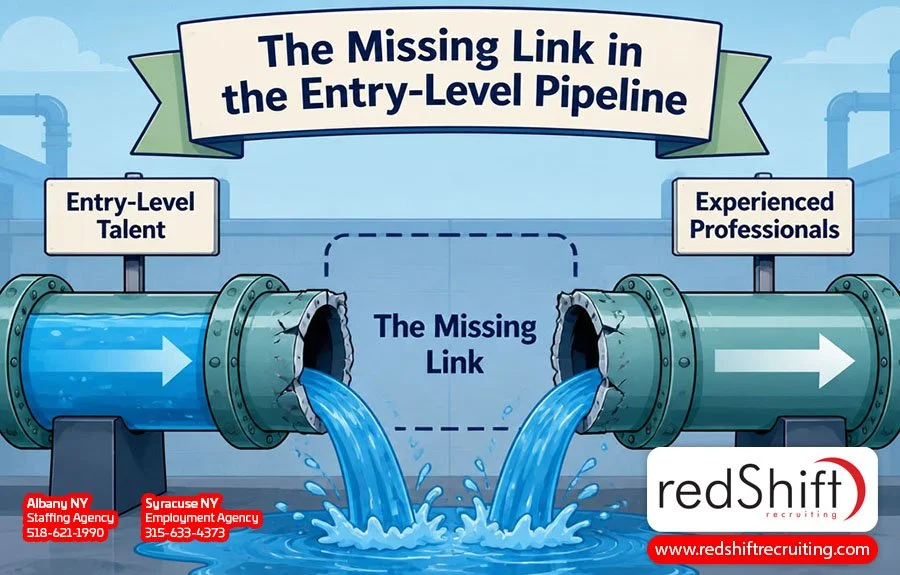
Discussions about the state of the entry-level job market often center around automation, economic uncertainty, hiring trends, and the growing challenge many candidates face when trying to land their first professional role. The concerns are valid: AI is changing some types of work. Employers are becoming more selective. "Entry-level" positions often demand skills or experience that would once have been developed on the job. And many recent graduates and early-career professionals are expressing frustration with the hiring process. At the same time, organizations across multiple industries continue reporting talent shortages, growing skill gaps, and difficulty finding qualified candidates.
These are all valuable discussions, even when they seem to point in different directions. But they may also be distracting us from more fundamental questions that could help explain why these seemingly conflicting realities can exist at the same time: How do inexperienced workers become experienced professionals in the first place? And how effectively is today's talent pipeline supporting that journey?
Every experienced accountant, engineer, technician, recruiter, manager, and executive started somewhere. At least one employer or hiring manager had to recognize their potential and invest the time, resources, and trust required to help them take the next step. Yet in many organizations, hiring strategies have shifted toward finding talent rather than developing it. As companies continue to adapt to rapidly changing technologies, business needs, and economic conditions, the challenge may not simply be identifying capable people. It may be creating them by turning potential into capability.
Every Experienced Professional Starts Somewhere
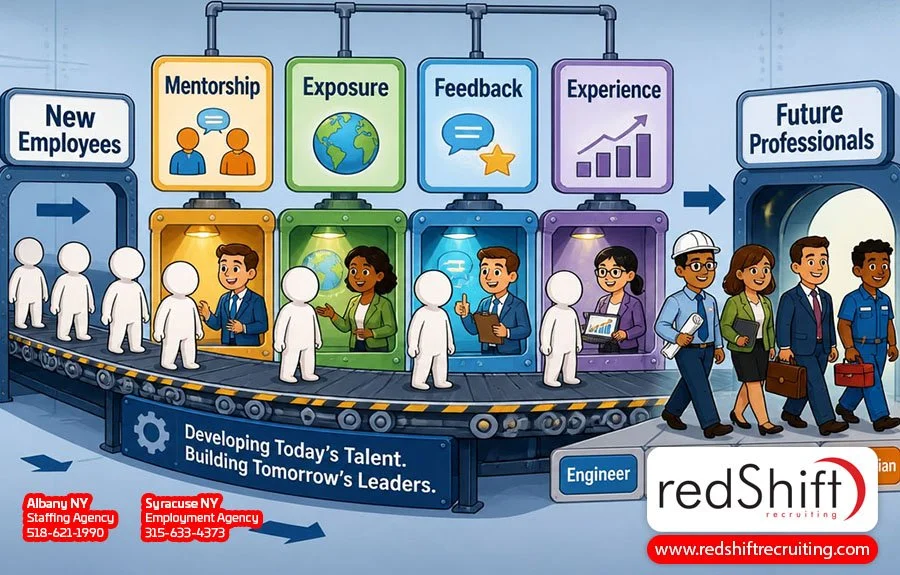
No one enters the workforce with years of experience, strong professional judgment, and a deep understanding of their industry. Those capabilities are developed over time through training, practice, exposure to real-world situations, and guidance from mentors and senior personnel.
On the traditional career ladder, entry-level roles served as the rung where inexperienced workers developed the foundational skills, technical know-how, and workplace experience that would shape the rest of their careers and prepare them to take on more advanced responsibilities.
Historically, the labor market contained a variety of pathways designed to help workers gain this critical experience. Apprenticeships, internships, mentorship programs, trainee positions, and true entry-level jobs all served as stepping stones between education and full professional responsibility. This system was built on an implicit understanding of a simple reality: that to hire experienced workers in the future, employers must invest in early-career talent today.
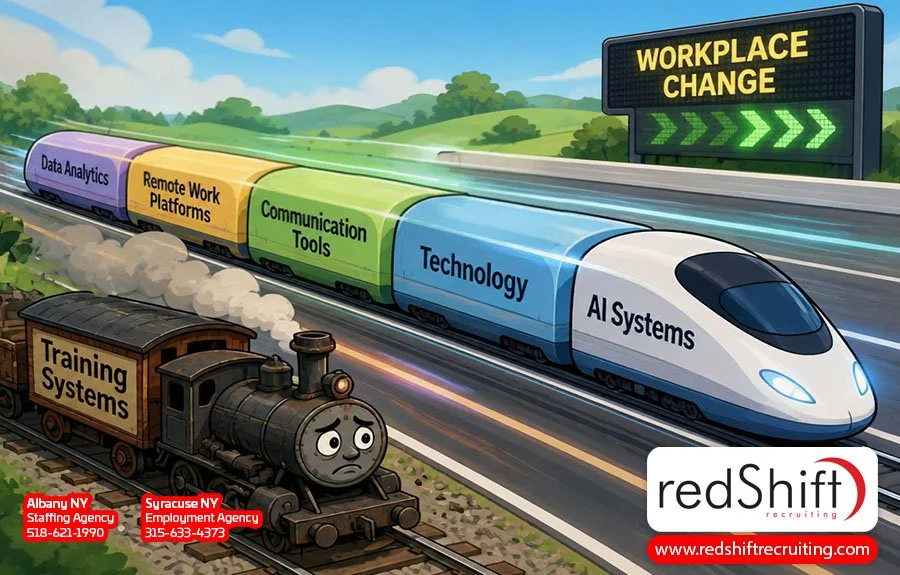
That truth hasn't changed, but the reality of the hiring market has. Organizations today face very different pressures than they did a generation ago. Leaner teams, rising training costs, changing technology, remote and hybrid work arrangements, demographic shifts, greater demands for immediate productivity, and fluctuating economic conditions have all influenced how companies approach hiring and talent development. And in many cases, the systems responsible for developing talent have not received the same level of investment as the systems designed to improve efficiency and productivity.
This missing link in the entry-level pipeline isn't just bad news for new graduates or young professionals. It's a growing challenge for organizations across virtually every industry. For many companies, the challenge is no longer just finding qualified employees to fill current openings; it's ensuring there will be experienced workers, managers, and leaders available five, ten, and twenty years from now.
The Skills That Aren't in the Manual
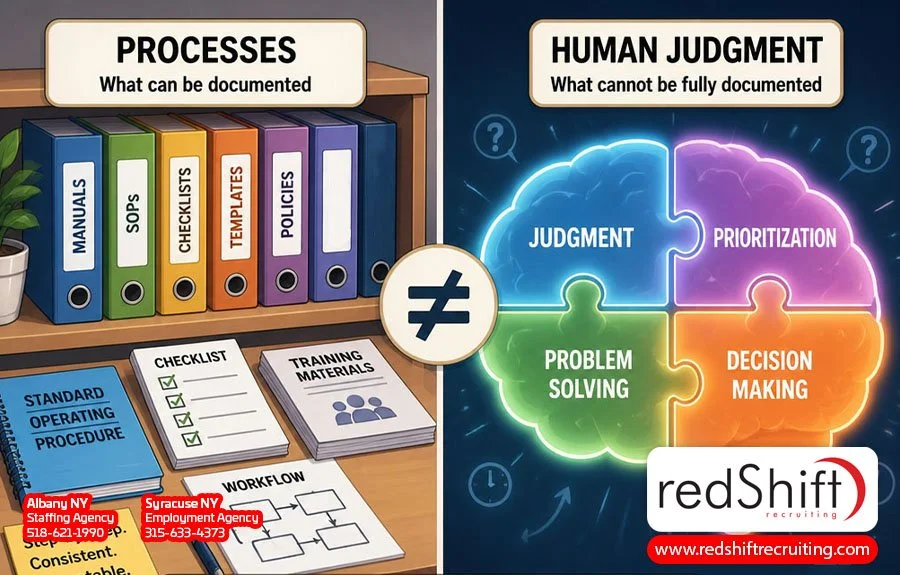
Organizations can often document processes more easily than they can document experience. New hires can be trained on software, procedures, compliance requirements, and technical tasks. With adequate training and documentation, many forms of knowledge can be transferred relatively efficiently.
The challenge is that professional development involves much more than learning a process. Some of the most valuable skills in the workplace are difficult to teach through manuals, videos, or checklists. Experienced professionals pass along judgment, prioritization, communication skills, problem-solving techniques, and the ability to navigate uncertain or unpredictable conditions to less experienced employees, whether through direct training or indirect observation. These soft skills and practical expertise are often what separate competent employees from exceptional ones.
Consider how professional expertise develops across different fields. An accountant learns what looks unusual in a financial statement. A recruiter learns how to handle a difficult conversation with a candidate or client. A manufacturing technician learns when a machine "doesn't sound right." A team lead learns that effective project management often depends on recognizing risks before they become problems. These lessons rarely come from a textbook. They develop through observation, feedback, repetition, and exposure to real-world situations that don’t always match standard operating procedures.
This is one reason why workforce development has become more challenging in recent years. Many organizations have reduced training time, operate with leaner teams, or expect entry-level employees to become productive more quickly than in the past. At the same time, technology continues to reshape how work is completed, with some tasks that once helped workers build experience now supported by AI tools or automated entirely.
Changing attitudes toward where work is done have added another layer of complexity, as organizations continue to look for ways to effectively develop employees across increasingly distributed teams. While studies continue to demonstrate significant benefits associated with remote and hybrid work arrangements, recent research suggests that fully distributed environments can create unexpected hurdles for early-career professionals by reducing opportunities for in-person observation, informal mentoring, and spontaneous workplace interactions.
These experiences are often difficult or even impossible to replace through documentation alone. They are the watercooler chats, the overheard call to a difficult client, the quick conversation after a meeting about what really happened and why. Professional development depends on observation, feedback, collaboration, and human connection, all of which play an important role in transferring knowledge and professional judgment from one generation of workers to the next.
Why Developing Talent Has Become More Difficult
The challenges facing today's talent pipeline are the result of multiple factors working together over time. Rather than a single cause, organizations across many industries are navigating a combination of demographic shifts, changing workplace expectations, technological disruption, economic pressures, and evolving workforce needs.
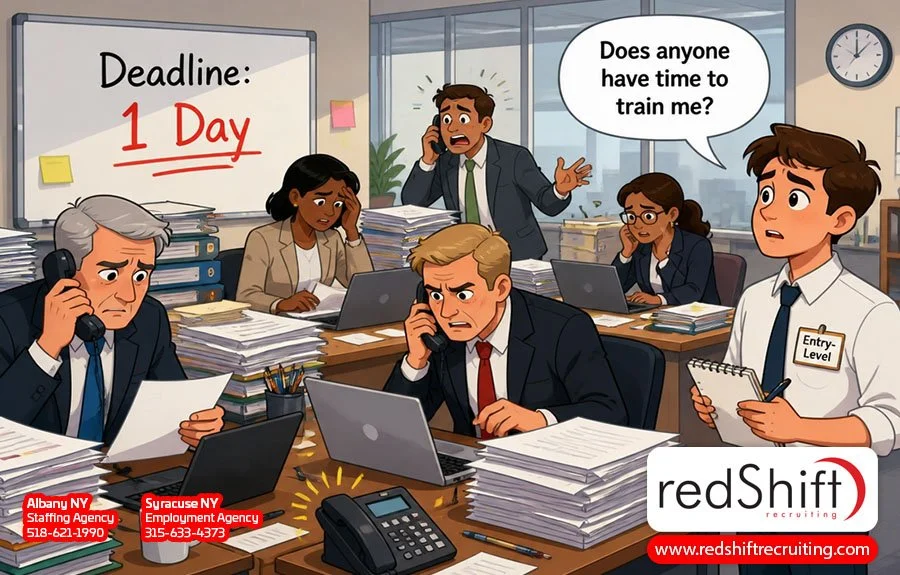
One of the most significant pressures is demographic. Rising retirements, aging workforces, and shrinking talent pipelines have reduced the number of experienced professionals available to mentor less experienced workers. At the same time, many organizations operate with leaner staffing models than in previous decades. Managers and senior employees are often responsible for larger workloads, leaving less time available for coaching, mentoring, and hands-on development. In understaffed and deadline-driven environments, workforce development activities are often among the first responsibilities pushed aside by day-to-day operational demands.
The challenge extends beyond employers to educational institutions as well. Organizations are constantly adapting to new conditions while trying to maintain productivity and control costs. At the same time, educators, colleges, and training providers face the challenge of preparing younger workers and career changers for jobs that are evolving rapidly. This development challenge creates a steep learning curve for incoming professionals, as corporate operations evolve faster than traditional onboarding models can adapt, and the gap between what is taught in a classroom and what is required on day one of an employee's first job continues to widen.
Flexible work arrangements are also factors for employers considering entry-level hiring. While many organizations have successfully embraced remote and hybrid work, developing and supervising less experienced employees in distributed environments requires different approaches, additional structure, and greater intentionality. As a result, some employers have become more cautious about hiring inexperienced workers into fully remote roles, preferring mid-level or senior candidates with reliable work histories—a shift that inadvertently reduces the number of true entry-level jobs available.
As organizations' ability to invest time in development becomes more constrained, many become correspondingly more selective about entry-level hiring, favoring candidates who already possess workplace experience, internship exposure, or demonstrated job readiness. Although this approach is understandable from an operational perspective, it can create a cycle in which fewer entry-level workers are given opportunities to gain the experience needed to advance, which could ultimately contribute to shortages of future leaders, mid-level professionals, and senior personnel.
Many companies have successfully adapted their technology, communication systems, and work arrangements to meet the changing demands of the modern workplace, but the systems used to prepare workers for long-term professional growth have not always evolved at the same pace. The result is a growing disconnect that may have long-term consequences if left unaddressed. Organizations continue searching for experienced talent, but fewer resources are being devoted to developing it.
Whether employees work in person, remotely, or through hybrid arrangements, employers still need effective ways to develop both soft skills and technical skills while supporting the transfer of knowledge from experienced workers to new hires. What often appears to be a hiring problem may actually be a workforce development problem, because when fewer workers are given opportunities to gain experience, there are inevitably fewer experienced professionals available in the future.
Rebuilding the Pipeline
For employers, the challenge goes beyond filling today's openings to ensuring there will be experienced professionals available to fill those openings in the years ahead. Leaders should consider how knowledge is transferred, how mentorship is provided, how professional judgment is developed, and how newer employees gain exposure to experienced colleagues in their organization. The specific solution will look different across organizations and industries, but the underlying principle hasn't changed: companies that want experienced workers tomorrow must start building entry-level talent pipelines today. Failing to develop the next generation is not only a costly missed opportunity; it increases the likelihood of future talent shortages and makes it more difficult to build the experienced workforce organizations will eventually need.
For job seekers, it's important to remember that not all entry-level positions provide the same long-term value. Salary, title, and flexibility matter, but so do opportunities to learn, build new skills, and gain exposure to the people and experiences that accelerate professional growth and prepare you for future leadership roles. As you seek out your first job in your field, look for job postings that provide mentorship, responsibility, and skill development: these are the investments that will continue paying dividends throughout your career. The role that helps you gain experience, responsibility, and professional judgment more quickly may ultimately create more long-term career value than a role that offers slightly more money, but fewer opportunities to grow.
Frequently Asked Questions
How Long Does It Take to Build an Experienced Workforce?
Developing expertise takes time. While the timeline varies by role and industry, most professionals require years of experience, feedback, increasing responsibility, and exposure to real-world situations before they can work independently at a high level. This is one reason short-term workforce development decisions often have long-term consequences. A shortage of experienced professionals rarely appears overnight, and rebuilding a weakened talent pipeline can take years.
Are Some Industries More Affected by Entry-Level Pipeline Challenges Than Others?
Yes. Industries with aging workforces, specialized knowledge requirements, licensing requirements, or persistent labor shortages often feel these challenges most acutely. Accounting, healthcare, manufacturing, engineering, and skilled trades are common examples. However, the underlying issue extends across entire industries because every sector depends on a continuous flow of workers gaining experience and moving into more advanced roles over time.
Are Internships More Important Than They Used to Be?
In many cases, yes. As employers become more selective, internships, apprenticeships, and micro-internship experience can help candidates demonstrate workplace readiness while gaining practical exposure to their chosen field. These experiences often provide opportunities to apply classroom knowledge, develop professional skills, and build confidence before entering full-time employment. For many candidates, they also serve as an important bridge between education and the workplace.
What Does This Mean for Gen Z Workers?
For many Gen Z workers, the biggest challenge can be a lack of opportunities to gain practical experience. As organizations become more selective, younger professionals may need to be more intentional about seeking internships, mentorship opportunities, certifications, volunteer leadership roles, and other experiences that demonstrate readiness for professional work. Building experience and a strong professional network has always been important, but in today's labor market it often requires greater initiative earlier in a career.
Will Skills-Based Hiring Help Address Talent Shortages?
Potentially. Skills-based hiring can help employers identify qualified candidates who may not follow traditional educational or career paths. It can also expand access to opportunities by focusing on demonstrated capabilities rather than credentials alone. However, hiring practices are only one part of the solution. Organizations still need effective systems for developing employees after they are hired if they want to build sustainable pipelines that support future talent.
Conclusion: The Future of the Entry-Level Talent Pipeline
Every experienced professional was once a beginner. While discussions about hiring often focus on technology, labor shortages, economic conditions, or changing workplace expectations, the long-term health of the workforce depends on something much more fundamental: whether people are given opportunities to gain experience and grow.
The specific solutions will vary by organization and industry, but the conclusion is the same: workforce development is not separate from talent acquisition; it’s an essential part of it. Organizations that invest in developing talent today support the pipeline that provides the future leaders and experienced professionals they need tomorrow. Ultimately, experienced professionals are not simply found—they are developed.

Article Author:
Ashley Meyer
Digital Marketing Strategist
Albany, NY
from Career Blog: Resources for Building a Career - redShift Recruiting https://www.redshiftrecruiting.com/career-blog/missing-link-in-the-entry-level-pipeline
via redShift Recruiting



Comments
Post a Comment