The Future of IT Support Jobs: What Comes After Tier 1
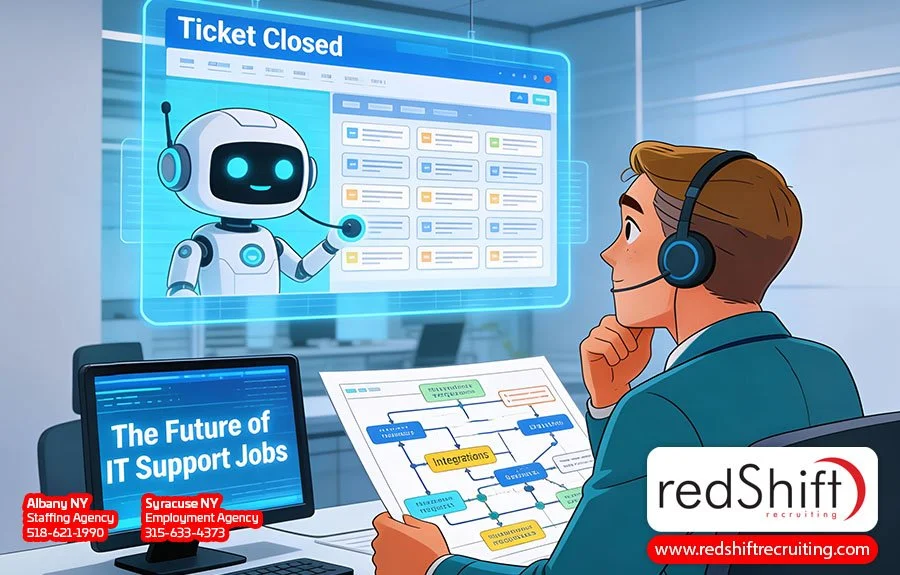
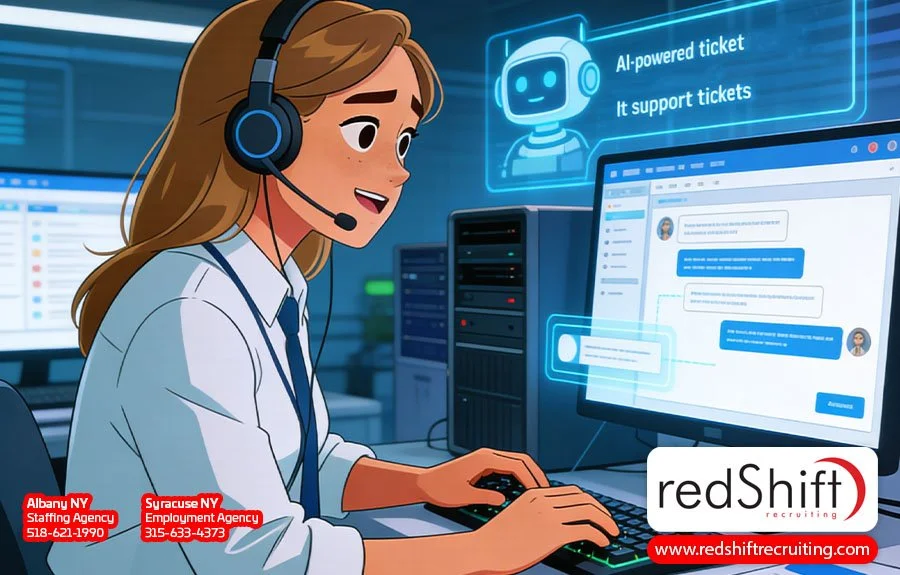
Picture the IT help desk at a mid-sized company on a Tuesday afternoon. An overwhelmed technical support specialist trying to keep up with a laundry list of password resets, access provisioning, and standard troubleshooting? No; this ticket queue is moving fast, but not because the IT team is large or it's a slow day for support requests. It's because an AI-assisted support system is handling the tasks that used to fill the entire day. The employee on shift has one open window that isn't the ticketing system. They're in the workflow configuration, trying to understand why the AI keeps sending finance department requests to the wrong queue. It's either a logic error or an integration problem, and they have to figure out which before it gets worse. Their title may still be Help Desk Technician, but what they're actually doing bears little resemblance to the original job description.
Some people assume the future of IT support jobs is a straightforward story where automation will replace workers, but this narrative oversimplifies the reality. It's true that artificial intelligence is absorbing the repetitive, rules-based work that used to define Tier 1 tech support. However, as those tasks move to AI, the work of managing, correcting, and improving AI systems has to go somewhere. That “somewhere” is a layer of IT work that's in high demand and growing fast: people who can supervise, configure, and troubleshoot these systems. This article breaks down what that role actually looks like, why the gap exists, and what it takes to fill it, whether you're an experienced IT professional or an entry-level job seeker looking to break into the IT industry.
What's Actually Being Automated in the Tech Industry, and What Isn't?
Not long ago, IT was considered one of the safest career paths, offering aspiring professionals a wide range of specializations, a strong median annual wage, and job security. Many entry-level candidates started in roles like Tier 1 tech support or desktop support before moving up the ladder or into specialized roles ranging from cloud computing and cloud architecture to software development or data science. For parents counseling their kids on potential careers or professionals considering a career change, IT was a reliable choice.
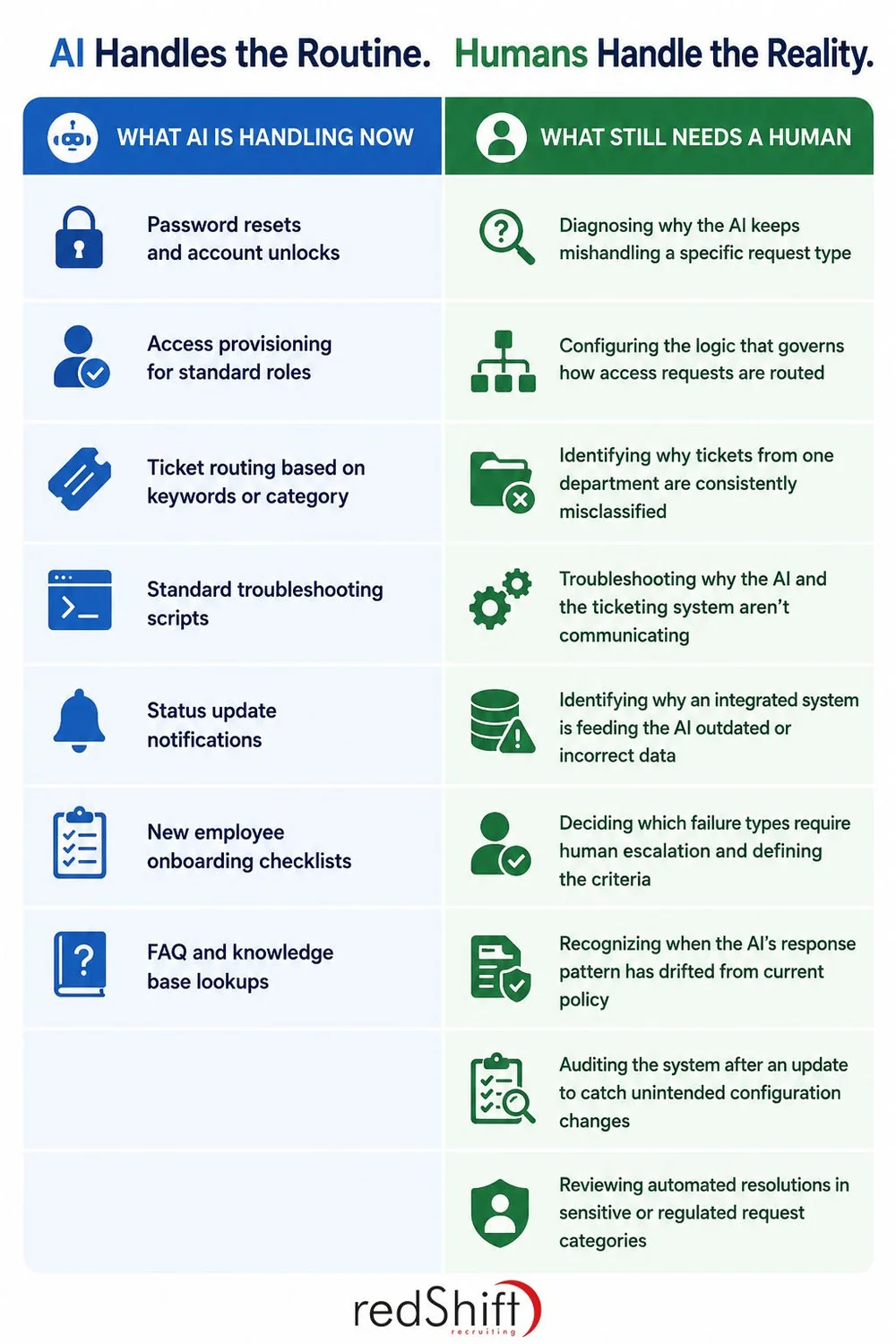
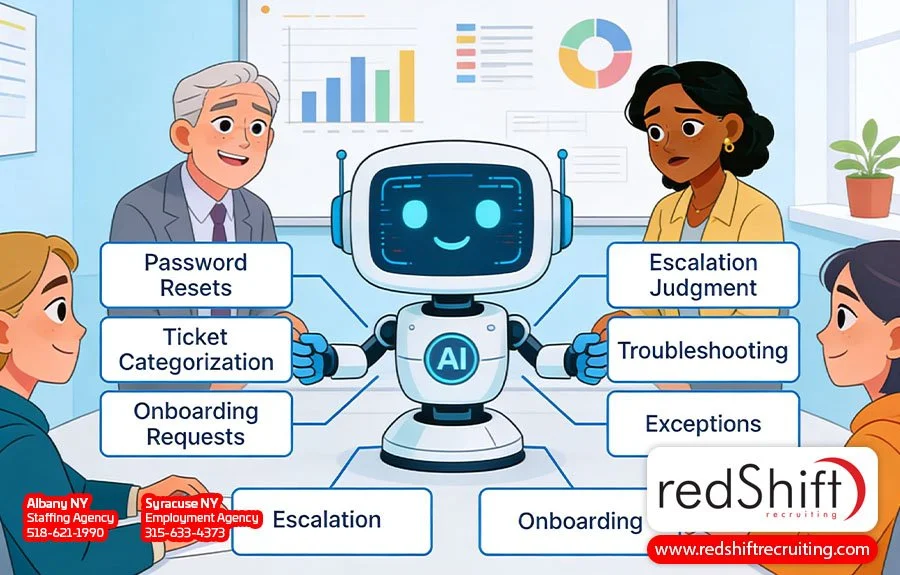
Then came artificial intelligence. AI tools are now handling a wide range of tasks that traditionally belonged to IT support roles, including password resets, access provisioning, ticket management, standard troubleshooting scripts, status updates, onboarding checklists, and more. As a result, the headcount required for that work is shrinking: the Bureau of Labor Statistics projects a 3 percent decline in computer support specialist employment through 2034, with automation considered a primary driver. Openings will still exist as workers retire or transition into other roles, but the consistent growth that defined this category for the past few decades has disappeared.
Not every sector of the IT industry is moving at the same pace, but AI adoption is already significant anywhere IT professionals handle high volumes of standardized support requests. In healthcare and financial services, for example, workflow automation platforms are handling the full cycle of routine requests end-to-end, from intake and triage to resolution and follow-up, all without a human touching the ticket. At the same time, strict compliance requirements in both industries mean the humans overseeing those systems have to be more vigilant, not less. Someone still has to ensure the automation is making the right decisions, catching the exceptions, and staying within regulatory boundaries. Mid-market SaaS companies are following the same pattern. Across the board, IT teams are smaller, but the remaining staff's job descriptions have changed: less time resolving standard issues, more time configuring, auditing, and correcting the systems handling that volume.
Conversational AI, automated workflow platforms, and similar tools are powerful, but they can't manage themselves. They can break, misroute, and drift from their original configuration, and when they do, they don't always flag it. That makes the person who understands the logic behind the automation, spots when something is going wrong, and knows how to fix it more valuable, not less.
Which puts IT support professionals in an interesting position. The Tier 1 role that defined the entry point into this field is shrinking, but the work of keeping AI-assisted systems running correctly is growing, and individuals with this skill set are in high demand. In considering the future of IT support jobs, perhaps the best question isn't whether these jobs are secure, but how are they changing, and what does it take to be ready?
What the New IT Careers Actually Look Like
The core responsibilities of the new IT support professional are largely the same across organizations, whether their title is AI Systems Technician, IT Operations Specialist, or Senior Help Desk Specialist. In many companies, it won't be a new hire at all, but rather an expanded set of responsibilities added to an existing IT role.
Whatever the title, the day-to-day work generally breaks down into four areas:
Workflow configuration: Setting up and maintaining the logic that governs how the AI handles requests is what keeps the system aligned with its original intent as ticket patterns shift and configurations are updated. This requires technical knowledge of how the platform processes inputs and routes outputs, combined with a clear understanding of the way support requests flow through an organization and how those requests affect business goals.
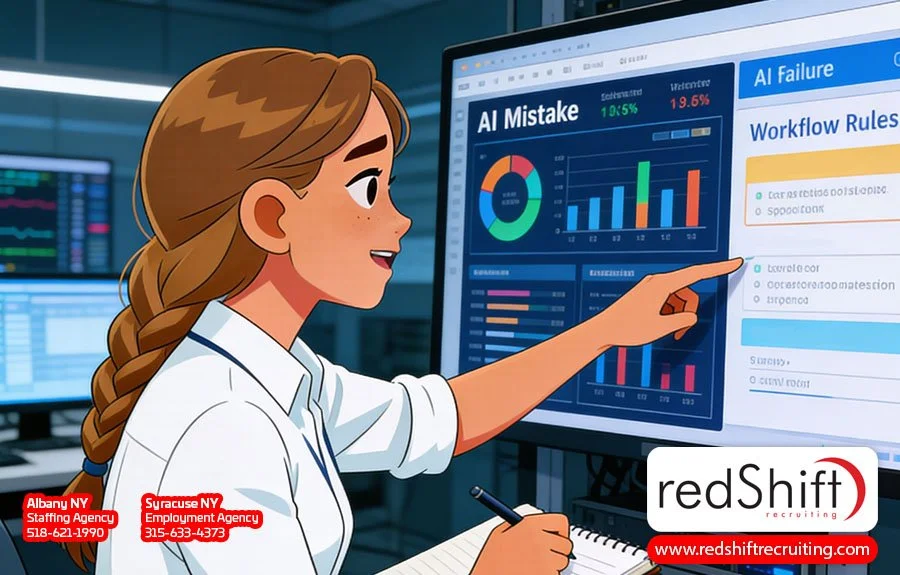
QA and exception handling: Catching the cases the AI gets wrong, understanding why they happened, and fixing the rule or configuration gap that caused the failure is methodical problem-solving work. It's less about coding and more about logic, process, and knowing how users behave, whether they're phrasing requests in unexpected ways or finding paths to work around a system that isn't giving them what they need.
Integration troubleshooting: The AI works fine in isolation—so why isn't it communicating with the ticketing system? Why is it pulling stale data from the directory? And why does it handle one request type correctly but misclassify a nearly identical one? These are complex issues that require strong problem-solving skills and foundational knowledge of operating systems, software applications, and system administration to minimize downtime for users and keep business operations running smoothly.
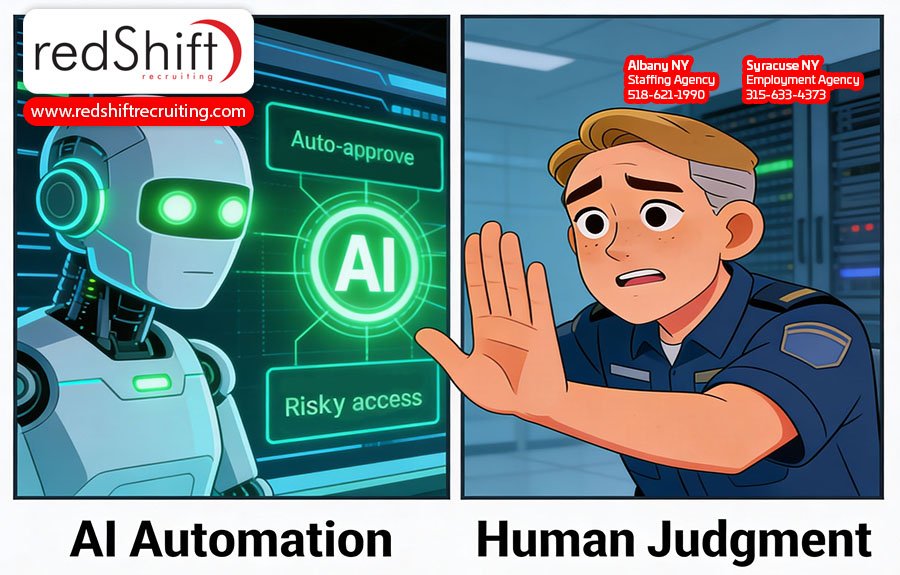
Escalation judgment: Deciding what stays automated, what needs a human, and the criteria that make that distinction consistent requires strategic thinking and critical thinking in equal measure. The threshold between the two must be calibrated correctly: tight enough that routine cases don't unnecessarily consume human time, but well-defined enough that edge cases and high-stakes requests don't slip through unreviewed.
These tasks don't require the deep specialization of a software engineer or a machine learning engineer building AI systems from scratch. What they do require is a solid understanding of systems thinking, user behavior, and process logic, along with the technical skills to apply that knowledge to AI-assisted workflows. For experienced IT professionals, that foundation often already exists, and the companies adopting these tools know it. Most aren't building separate teams to manage them; they're looking at whoever is already in the room. The person who steps up to own the configuration and QA on systems their company has already deployed is the one with the competitive advantage.
That said, this isn't permanently safe ground. AI will eventually become more capable of configuring AI, and that will affect this layer too. But as these systems grow more complex and more embedded in business operations, handling everything from access requests to flagging potential security incidents, the range of exceptions and edge cases that require human judgment grows with them. And more categories automated means more boundary conditions to manage, not fewer. For IT professionals thinking about career growth, understanding the difference between the work that's disappearing and the work that's moving up the stack will help you plan more strategically for the future.
Why This Gap Exists Right Now
When a company deploys an AI-assisted support platform, the vendor typically handles the implementation. They configure the initial workflows, integrate the systems, and ensure everything is running before handing it off. Many vendors do offer ongoing support or managed service options, but these aren't a substitute for internal ownership.
Someone still needs to own the platform day to day: managing configuration, monitoring for drift, and stepping in when the AI starts making the wrong calls. That responsibility tends to fall to whoever was closest to the implementation, often without clearly designated ownership and regardless of whether they have the time or platform knowledge to manage it effectively. The result is predictable. The system degrades quietly, misrouting tickets in ways that can take time to notice, and when it finally fails visibly, the AI gets the blame for what was actually a process gap. This pattern is common enough in early-adopting organizations that it has a name in IT operations circles: it's called "configuration drift," and it's one of the primary reasons AI support implementations underperform on their initial promise.
A key issue is that the training pipeline hasn't caught up. IT careers have traditionally been built on a range of well-defined specializations, such as help desk fundamentals, technology infrastructure management, system administration, computer networks, and server maintenance, and the certification tracks and degree programs that support those paths are well-established. What hasn't caught up yet is any structured training for managing and maintaining the AI systems that are increasingly running on top of that infrastructure. Vendor certifications exist for platforms like ServiceNow and Zendesk, but these tend to focus on using the tools rather than owning their ongoing configuration and QA. Currently there's no specific recognized credential that fits the unique responsibilities of these new roles, which means people are arriving at this skill set from different directions and with uneven preparation.
That's true even for experienced IT professionals making the transition — system upgrades and new platform integrations have always been part of the job, but managing AI-assisted workflows requires a different kind of human oversight and risk management than most traditional IT roles have demanded. An IT operations specialist managing a new platform integration, for example, is now also making decisions that touch incident response and data analytics in ways that weren't part of the role five years ago.
That gap in formal training is driving a skills shortage, and that shortage creates a real opening. The organizations furthest along with AI-assisted support are looking for people who can not just use these tools, but also understand why they fail and how to fix them. Those roles increasingly call for clear communication and soft skills alongside technical ability, since the work requires explaining system failures to non-technical stakeholders, managing frustrated users when automation gets something wrong, and making the case internally for configuration changes that affect the whole organization. That combination of solid IT foundations, problem-solving abilities, and hands-on AI operations experience is rare right now, and for anyone thinking about career progression or new career opportunities in the tech industry, it's a good place to focus.
What to Learn to Succeed in the Current IT Industry
So what does it actually take to prepare for the future of IT support jobs?
If you're entering IT or early in your career:
An associate's degree in IT or network systems gives you a stronger foundation than many people think. It covers the fundamentals that translate directly to AI operations work: local area networks, cloud platforms, operating systems, and the basics of system administration. Credentials like CompTIA A+ and Network+ are still worth pursuing—they build the required skills that make AI operations learnable, and they remain consistent advantages regardless of how the tools may evolve.
From there, a vendor certification can help you stand out. ServiceNow CSA, Zendesk Support Administrator, and Freshservice certifications are some of the credentials worth researching, as they show up in job requirements more consistently than others. For those interested in the infrastructure side of this work, platform certifications like Google Cloud Platform's Associate Cloud Engineer are also worth considering, as AI-assisted support systems increasingly run on cloud infrastructure. Do your homework on which is most relevant to the roles you're targeting, and don't let certification-chasing crowd out hands-on experience. One well-chosen cert beats three mediocre ones.
The most useful thing you can do costs nothing: find a free tier of any AI-assisted ticketing or support tool, set it up for a real or invented use case, break it deliberately, and document what failed and why. A writeup explaining what the system got wrong and what rule would fix it can carry real weight in an interview. It demonstrates that you can think critically about how these systems behave, not just operate them.
If you're already working in an IT support role:
Start getting hands-on with whatever AI tools your company has already adopted, even informally. If your team uses an AI-assisted ticketing platform, volunteer to sit closer to its configuration. If nobody owns the QA on that system, make the case that you will.
Then practice writing exception documentation. When the system fails, write up the failure in structured form: what happened, what caused it, and what the fix was. Sharing that work with your manager and proposing improvements based on the pattern demonstrates your ability to think beyond ticket resolution and operate at the level these emerging roles require, making a visible case for career advancement and leadership opportunities without waiting for someone to create the role around you.
The skills this work demands are largely ones that good IT professionals already have; what's missing is the deliberate application to this problem. That gap is an advantage for anyone willing to fill it.
Frequently Asked Questions
Will AI Replace IT Support Specialists Entirely?
Not entirely, but the roles that remain will look different. Machine learning systems and automation are already handling a significant share of Tier 1 tasks, and that share is growing. Many jobs in information technology occupations are changing as a result, but changing is different from disappearing. The roles being automated are built around pattern matching and rule application, whereas the roles emerging require judgment, contextual knowledge, and the ability to manage systems that handle routine tasks autonomously while still needing human oversight. Software developers and software engineers build these systems, but someone inside each organization still needs to operate, configure, and correct them. The net effect on employment growth across IT is still being measured, but demand is moving up the stack, not off the table.
How Does AI-Assisted IT Support Interact With Cybersecurity?
AI-assisted support platforms handle routine requests, but cybersecurity functions remain largely separate and human-led. Cyberthreat detection, incident response, and security audits are still the domain of information security analysts and security analysts, but cybersecurity principles around access management do intersect with IT support roles, particularly in how provisioning requests are handled and what security measures govern automated approvals. While AI may process the request, a human still needs to ensure the underlying controls are configured correctly to protect against cybersecurity threats that could exploit gaps in the automation. The overlap between IT operations and security is growing, and professionals looking to specialize in this direction should consider credentials like AWS Certified Security alongside their platform certifications.
What About Other Specialized Information Technology Occupations—Are They Affected Too?
Specialized roles like network engineers, system administrators, and cloud infrastructure professionals are less immediately affected by the Tier 1 automation wave. These roles involve complex work—designing and maintaining local area networks, managing cloud platforms, overseeing technology infrastructure—that requires deep expertise and hands-on judgment. That said, all of these roles are beginning to interact with AI systems in some capacity, and familiarity with how those systems behave is becoming a useful secondary skill across the board. The skills shortage affecting AI operations roles is starting to appear in some of these adjacent specializations as well, particularly where cloud architecture and AI infrastructure overlap.
What Soft Skills Matter Most for Career Progression in This Work?
The technical side of AI operations work gets most of the attention, but soft skills matter more than most job descriptions acknowledge. Clear communication is essential: these roles sit between the AI system and the rest of the business, which means regularly translating technical failures into plain language for nontechnical stakeholders and making the case internally for configuration changes that affect multiple teams. Emotional intelligence is equally important: when automation gets something wrong, the person who owns the system is often also the one managing frustrated users and resetting expectations. Negotiation skills are also highly valued, as support professionals may have a voice in deciding what gets automated and what doesn't, a conversation involving competing priorities that requires as much persuasion as technical knowledge. These skills don't replace technical ability, but they are often what makes candidates stand out for career advancement and leadership opportunities.
Is This a Good Long-Term Tech Career Path, or Just a Transitional Role?
Any tech career built around a specific tool carries some risk that the knowledge becomes obsolete or the role gets absorbed into something else. Career-wise, the better frame is to think of IT support and AI operations not as a particular job title but as a layer of expertise that continues to build on itself as the technology changes. Core skills, like understanding how automated systems fail, building escalation criteria, minimizing downtime through proactive configuration management, and applying security measures to automated workflows, are grounded in IT fundamentals, not a specific platform. The professionals best positioned long-term are those who commit to continuous learning, building genuine depth in AI operations while keeping their broader technical skills current.
Conclusion: The Gap Is the Opportunity
The repetitive, rules-based work that defined Tier 1 IT support is moving to AI. What's growing in its place requires the same foundational IT knowledge—computer networks, systems thinking, and understanding how users break things—combined with the judgment to manage systems that are powerful but not self-sufficient. Fields from cybersecurity to data science are feeling this shift, and IT support is no exception. The demand for people who can do this work well is real, and the supply isn't keeping up.
The person who can manage what AI does—not just use it—is the most valuable profile in IT support right now. Whether you're already in the field or just starting out, the skill set is more accessible than it looks, and the opportunity is there for anyone willing to go after it.

Article Author:
Ashley Meyer
Digital Marketing Strategist
Albany, NY
from Career Blog: Resources for Building a Career - redShift Recruiting https://www.redshiftrecruiting.com/career-blog/future-of-it-support-jobs
via redShift Recruiting


Comments
Post a Comment