The Jobs AI Can't Replace (And Why Human Work Isn't Going Away)
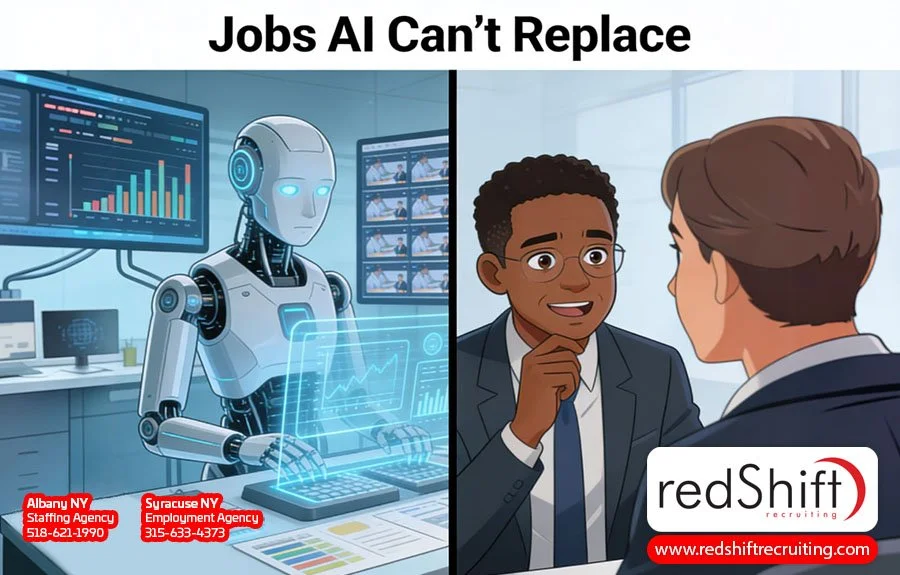
You've seen the headlines: artificial intelligence is coming for white-collar work. Large language models can pass the bar exam, write code, and summarize a 40-page report in seconds. Generative AI tools are doing in minutes what used to take junior employees days. If you've found yourself staring at your coffee wondering whether your career path has an expiration date, you're not alone, and you're not being paranoid.
But here's what those headlines tend to leave out, according to a recent analysis by Sequoia Capital: for every dollar companies spend on software, they spend six on people. It’s true; the job market is changing. It’s also true that human work isn't going away. The real story is more interesting than either the doom or the cheerleading: it's about which work, and why.
What AI Is Actually Good At
Let's give credit where it's due: understanding what AI systems genuinely do well is the only way to understand what they don't.
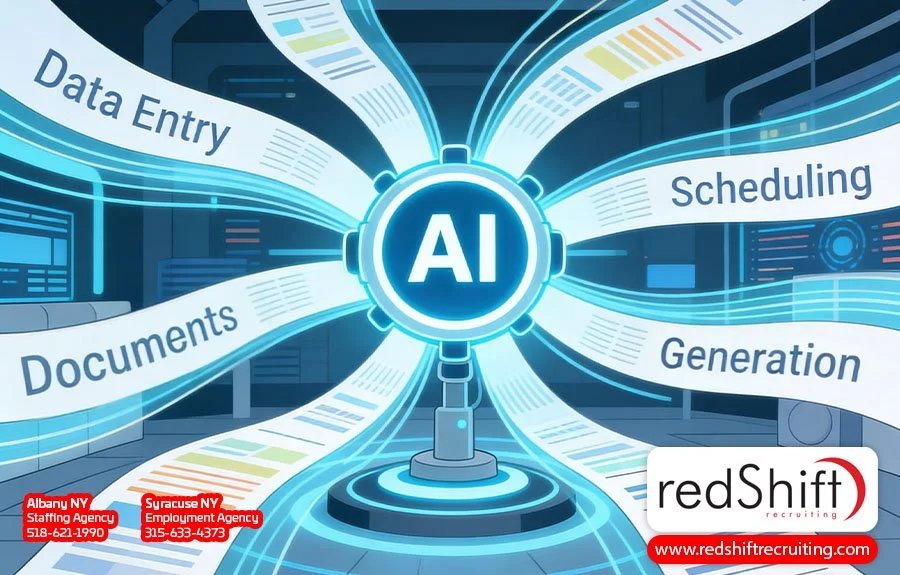
Machine learning models are extraordinarily good at finding patterns in large amounts of data and acting on them at scale. Give one enough examples of a task, and it will eventually do that task faster, cheaper, and more consistently than most humans. AI tools have made genuine inroads into repetitive tasks across nearly every industry, from data entry and scheduling to medical billing and standard contract generation. These aren't small things—in many cases they represent a major shift in how whole departments operate, and it's happening now, in real workplaces, not in some distant future scenario.
In the last few years, generative AI tools have accelerated the pace considerably. The ability to produce a competent first draft of almost anything from a marketing email to a software function or a financial summary has changed what a junior employee's day looks like in ways that would have seemed far-fetched in 2019. For a lot of workers, that change has already arrived and is already personal.
So why are companies still hiring humans? Because there's an entire category of work that pattern-matching cannot touch, and that category sits at the center of how businesses actually function.
The Split That Changes Everything
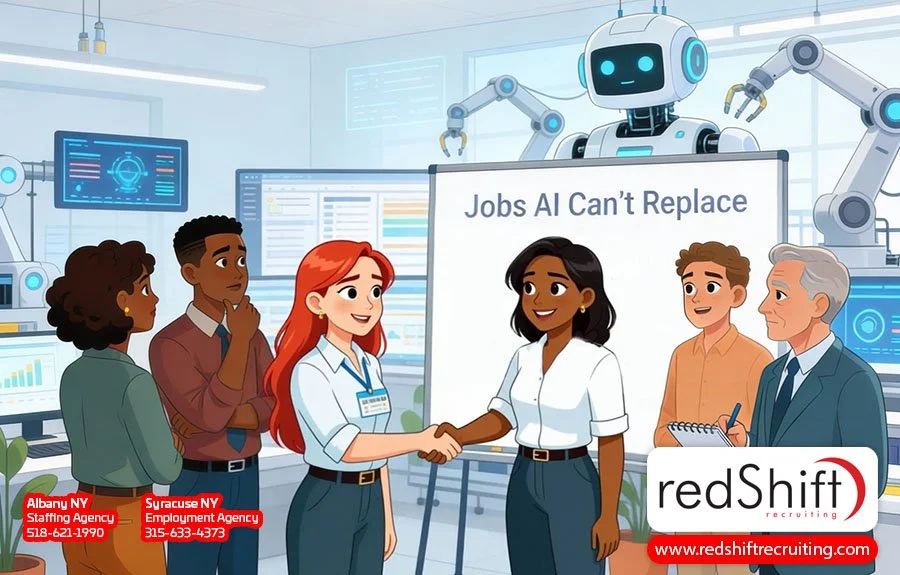
Not all work is created equal—at least not from AI's perspective. Sequoia highlights a useful framework for thinking about jobs AI can't replace, bringing it down to a simple distinction: intelligence work versus judgment work.
Intelligence work is complex, but ultimately rule-governed. Think about processing an insurance claim, scheduling a fleet of delivery drivers, flagging a suspicious transaction, or routing a customer support ticket. The guidelines governing each of those tasks can be genuinely intricate—but they are guidelines. There's a defined track to follow, and given enough data, AI can learn that track and run it faster and more consistently than any human. AI automation excels here, and it's getting better at it quickly.
Human judgment is different in kind, not just degree. It's experience-based, contextual, and deeply relational. Knowing which client needs a call before they ask for one. Choosing when to push back on a decision and when to let it go. Reading a room and adjusting mid-conversation. Making a split-second decision with incomplete information and being willing to stand behind it. These things aren't learned from a dataset—they're built from years of practice, failure, and human understanding that can't be reduced to a pattern.
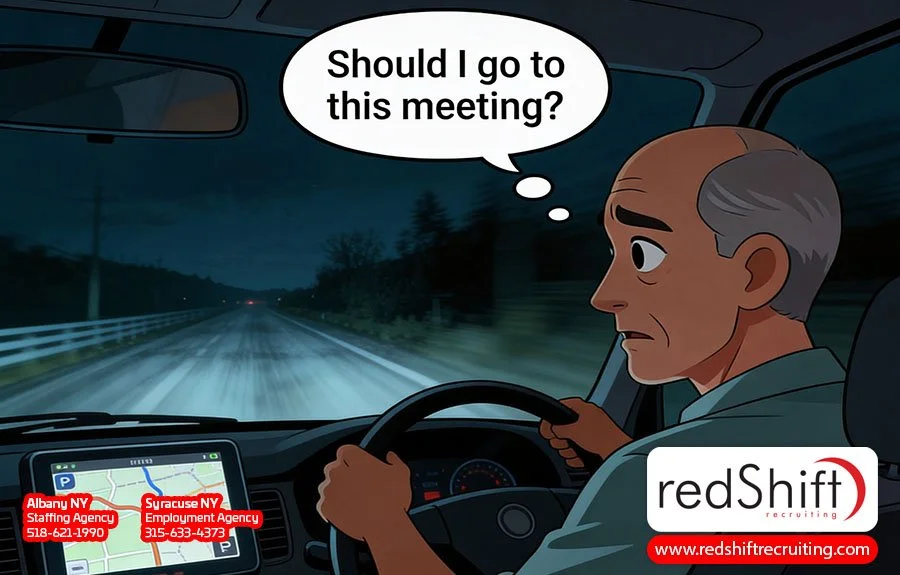
Consider a GPS. It can tell you the fastest route, suggest a detour when you hit a traffic jam, and get you back on track when you've gotten lost. It's trained on extensive maps, historical traffic patterns, and real-time road conditions. In short, it can get you where you want to go. It can't tell you whether the meeting is worth attending, whether the relationship on the other end is worth maintaining, or whether you should turn around entirely.
Notably, the line between intelligence and judgment isn't fixed. As AI systems accumulate more experience in a given field, some types of work that once required human expertise can gradually become something a machine handles. Basic legal document drafting is a good example—five years ago it reliably required a paralegal; today AI handles first drafts competently enough that the paralegal's time can go to other tasks. This tells us that the goal isn't to find permanent shelter from AI—that's a constantly moving target. The better focus is to keep developing the kind of critical thinking and human insight that compounds over a career and stays ahead of what the technology can absorb next.
Most jobs sit somewhere in the middle of the intelligence-judgment spectrum, which means the shift underway isn't about whole jobs disappearing overnight. It's about the intelligence portions getting handled elsewhere, leaving the complex decision-making and judgment portions as the core of the work. That's where human workers need to be building, and in most fields, it's where the most interesting and durable opportunities already are.
What This Looks Like on the Ground
Frameworks are useful, but real examples are better. Here's what the intelligence-versus-judgment split actually looks like in three fields where human skills are very much still in demand.
IT Support
AI handles Tier 1 support tickets efficiently and at scale—tasks like password resets, connectivity issues, and standard troubleshooting. That work is largely gone or going, and there's little point pretending otherwise.
But when a security anomaly appears at 11pm and someone has to decide whether it's a false alarm or the early sign of a breach, that call doesn't go to an algorithm. It goes to a person—someone with enough context, experience, and human judgment to weigh the risk and act on it. The vendor relationship that quietly saved the contract renewal last quarter? Also a person. So is the technician who drove to the office at 7am because something failed that couldn't be fixed remotely.
The entry-level IT role is evolving fast. Less ticket processing, more system oversight, escalation handling, and increasingly, managing the AI tools doing the Tier 1 work. The human presence in IT isn't disappearing, but it is moving up the stack, toward the work that actually matters when things go wrong.
Accounting
Most accountants will tell you they're glad to be rid of the tedious parts of their jobs. Modern AI tools and accounting software can close the books, reconcile transactions, and flag discrepancies faster than any human team, and that's a genuinely good thing for the profession when it’s grounded in human oversight.
But who calls the small business owner panicking in March because their estimated taxes are wrong? Who signs the audit? Who looks a client in the eye and tells them their "creative" expense categorization is going to attract exactly the kind of attention they don't want? That's human connection, legal reasoning, and hard-won professional judgment—none of which lives in a software platform.
The accounting shortage makes this more urgent, not less. Sequoia's analysis found that the US accounting workforce has shrunk by roughly 340,000 people over five years, even as demand for accounting services has kept climbing. AI adoption is accelerating across the profession, but it isn't solving the human shortage. If anything, it's making skilled accounting professionals more valuable even as they become considerably harder to find.
Skilled Trades and Assembly
For years, skilled trades barely registered in conversations about the future of work—the focus was almost entirely on white-collar disruption. That's changing, and the data is starting to reflect what tradespeople already knew: physical work that requires presence, adaptability, and hard-won expertise is among the most durable work in the economy right now.
It's not hard to see why. Fine motor skills, real-time quality judgment on a manufacturing floor, and the kind of adaptive physical dexterity that comes from years of hands-on expertise are some of the skills that remain stubbornly difficult for robotics and automation to replicate consistently. Custom fabrication, on-site installation, and hands-on inspection aren't problems you solve from a server farm. That's why manual labor that requires both technical knowledge and physical presence represents some of the most AI-proof work in the economy right now.
The skilled trades worker isn't nervously watching the AI headlines. They're already employed, already in demand, and in many markets turning down work because there simply aren't enough of them. That's not a coincidence; it's a structural reality that public perception of "safe careers" has been slow to catch up with. A four-year degree in a field being rapidly automated is no longer the obvious safe bet it once seemed; a skilled tradesperson with hands-on expertise and a full calendar is.
The Part That Doesn't Show Up in the Headlines
So why does the $1/$6 ratio persist even as AI investment grows? Why aren't companies simply redirecting that labor spend into software and calling it a day?
First, accountability can't be automated. AI can produce the work; it cannot be held responsible for it. Someone has to sign the audit, own the decision, and answer the phone when something goes wrong. That's true for business leaders making strategic calls, for project managers coordinating across teams, and for the junior employee whose name is on the report. The moment something matters enough to have consequences, a human has to stand behind it. That's not going to change because the underlying work got faster or more automated.
Next, trust is built between people. The relationship building at the core of most professional roles isn't a soft add-on—it's often the reason a client stays, a deal closes, or a team holds together under pressure. Clients and colleagues extend trust to humans in ways they don't extend to systems, and that trust is earned through emotional intelligence, consistency, and the human touch that makes a difficult conversation feel like a partnership rather than a transaction. That layer is stubbornly human, and it shows up in the numbers.
Finally, physical presence is irreplaceable in more roles than we admit. Think about what it actually means to do the job: a field technician diagnosing a network failure on-site, a tradesperson reading a room's wiring before touching it, or a nurse making a judgment call at the bedside. Healthcare professionals, technicians, tradespeople, and numerous other roles represent a substantial portion of the workforce that simply has to be present. Health care alone employs tens of millions of people whose work cannot be delivered through a screen or a server, and the same is true across manufacturing, construction, and anywhere that human qualities like adaptability and physical judgment determine whether the job gets done, and gets done right.
These are structural realities, and they're why the labor-spend number stays where it is, and why the version of the AI story where software simply takes over keeps failing to materialize the way the headlines suggest it will.
So What Should You Actually Do?
If you've read this far, you're probably not someone who ignores uncomfortable questions. So here's a practical one: look at your current role, or the career path you're building toward, and ask which parts are intelligence work and which are judgment work.
The intelligence parts cover more ground than most people expect—and that includes some things that might surprise you. At one end sits the obvious repetitive stuff: the scheduling, the form-filling, the standard reports that follow the same pattern every week. But AI is also excelling at work that feels considerably more sophisticated: processing large datasets, drafting contracts from templates, running financial models, and flagging anomalies in billing records. What these tasks share isn't simplicity (some of them are genuinely complex); it's that they're ultimately rule-governed. Given enough data and clear parameters, AI can learn the rules and execute them faster than any human team. For many professionals, that's already happening, and what it means in practice is less time on the parts of work few people enjoyed and more time doing work that's actually interesting, engaging, and challenging.
The judgment parts are where to invest your time and attention deliberately. Strategic thinking, problem-solving under real pressure, interpersonal skills that hold a client relationship together when something goes wrong—these human strengths become more valuable as AI absorbs the routine work around them. Start by identifying one part of your current role that genuinely requires your judgment: a decision only you can make, a relationship only you can maintain, or a problem only you know how to read. Then find ways to do more of it. You don't have to overhaul your career; you just have to refocus your direction.
Don't make the mistake of ignoring AI either. Staying relevant in this AI era means developing real AI literacy—not surface-level familiarity, but enough working knowledge to understand what these tools do well in your specific field, where they produce confident-sounding nonsense, and when to override them. An accountant who knows exactly what their AI tools can and can't be trusted with is worth considerably more than both the person who avoids the tools entirely and the one who accepts their output without question. The same pattern holds across other jobs in IT, manufacturing, health care, human resources, and beyond.
One honest note to close on: many jobs that exist today will look different in five years. Some will shrink. New ones will emerge that didn't exist when you started your career. Although the data points toward a net job growth over the next decade, that doesn't mean every displaced worker will land softly. The transition will be harder for some than others, and that makes it more important than ever to choose to focus on developing transferable skills now, not later. The constant through all this change isn't in having a specific title or being responsible for certain tasks; it's having strong, uniquely human judgment. Deepen your expertise deliberately, take on new responsibilities if you can, and work toward roles where your judgment—not just your output—is what people are counting on.
Frequently Asked Questions
My Job Is Almost Entirely Repetitive Tasks Right Now. Does That Mean I'm in Trouble?
Not necessarily, but it's a signal you should pay attention to. Many jobs start heavily weighted toward repetitive tasks, especially at the entry level. Instead of asking if your current role is at risk, the better question is whether there's a judgment ladder to climb in your field and whether you're actively moving toward it. Even in heavily process-driven positions, there are moments that require genuine judgment, whether it's a difficult customer interaction, a decision made without a clear playbook, or a problem outside the usual workflow. Those moments are where your value is building. Find more of them, and make sure the people above you know you can handle them.
Which Industries Are Most at Risk Right Now and Which Are Safest?
Jobs that AI can be trained on quickly (anything with clear inputs, defined rules, and measurable outputs) are most exposed. Insurance claims processing, legal document review, customer service, administrative support, and basic data analysis are all increasingly seeing AI replace people in certain tasks.
At the more protected end sit roles requiring physical presence, human leadership, and real-time adaptive judgment. These include skilled trades, healthcare professionals, social workers, and fields that require human connection at a professional level. Creative jobs occupy a nuanced middle ground: AI has disrupted certain types of creative work, but original, judgment-driven creativity still remains highly valuable. Many roles involving emotional support, coaching, and personal accountability fall into a similar category, from therapists and nurses to personal trainers and teachers. The technology is advancing, but the human element remains structurally important.
Most people live somewhere in the middle. Ultimately, your position within your field matters more than the industry label on your resume.
Should I Be Learning AI Tools Even if My Job Doesn't Require It Yet?
Yes, and now is the best time to do it on your own terms. AI skills are becoming a baseline expectation across many professional fields. Meaningful AI literacy doesn't require a course or certification; it requires using tools relevant to your field regularly enough to understand how to use them, what they do well, where they fall short, and when not to trust them. The professionals who will stay ahead of the curve are the ones who can direct, evaluate, and override AI outputs confidently. In a market where AI literacy is becoming standard, opting out isn't a neutral choice but a disadvantage that compounds over time.
Are Jobs That Didn't Exist Five Years Ago Safer?
Not automatically. Just as technologies that once seemed like science fiction (think of self-driving cars, real-time language translation, and voice recognition) are now routine, AI capabilities that feel cutting-edge today will become standard faster than most people expect. New roles built around a current technological gap aren't inherently safe. Future-proof careers, old or new, share the same traits: they sit at the judgment end of the spectrum, involve human leadership and complex ideas that don't reduce to a pattern, and require someone to own the outcome. In the most important situations, only a human can meaningfully evaluate whether an AI's output is correct, appropriate, or trustworthy. That's true of any role, whether it's fifty years old or five.
I'm a Parent Trying to Help My Kid Pick a Direction. What's Actually Worth Studying Right Now?
No major or credential is a guaranteed safe harbor, but certain combinations of skills hold up better than others. Fields that require creativity, human judgment, and relationship-based work are more durable than those dominated by data analysis or rules-based decision-making. AI-proof jobs tend to require physical presence, emotional support, or someone willing to own the outcome. Instead of trying to find roles that AI can never touch, help your child focus on building the kind of skills and expertise that makes someone genuinely hard to replace. The cross-disciplinary skill worth pushing for in any field is AI literacy: enough working knowledge to direct AI tools effectively, evaluate their outputs critically, and know when only humans can make the call.
Conclusion: The Shift Is Real, But So Is the Opportunity
The headlines aren't wrong—AI is changing work, and some roles will look very different in five years. But the data tells a more complete story. For every dollar spent on software, six go to people. The World Economic Forum's 2026 Future of Jobs Report projects a net gain of 78 million jobs globally by 2030, with 170 million new roles created even as 92 million are displaced. More than half of business executives globally expect AI to displace existing jobs, which tells you the anxiety is real and the stakes are genuine. But the goal isn't to replace humans wholesale; it's to change what humans spend their time doing.
The workers and organizations that come out ahead won't be the ones who resisted that change. They also won’t be the ones who handed everything to the machines. They'll be the ones who understood the difference between intelligence work and judgment work, leaned deliberately into the latter, and built careers on the parts of their jobs that actually require a person. That's not a guarantee, but it's the best map we have.

Article Author:
Ashley Meyer
Digital Marketing Strategist
Albany, NY
from Career Blog: Resources for Building a Career - redShift Recruiting https://www.redshiftrecruiting.com/career-blog/jobs-ai-cant-replace
via redShift Recruiting


Comments
Post a Comment