Seasonal Employee Onboarding Done Right: From First Day to Final Season
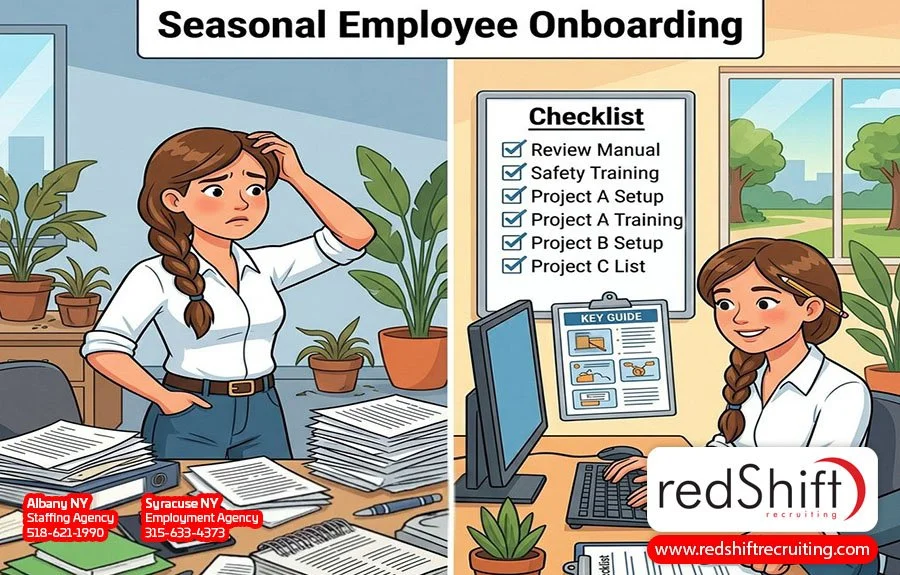
Most advice around seasonal hiring focuses on finding workers quickly, and there's no shortage of guidance on where to post, how to screen, and when to start. But the part that actually determines whether a seasonal hire helps your team or adds to its workload happens after the offer is accepted.
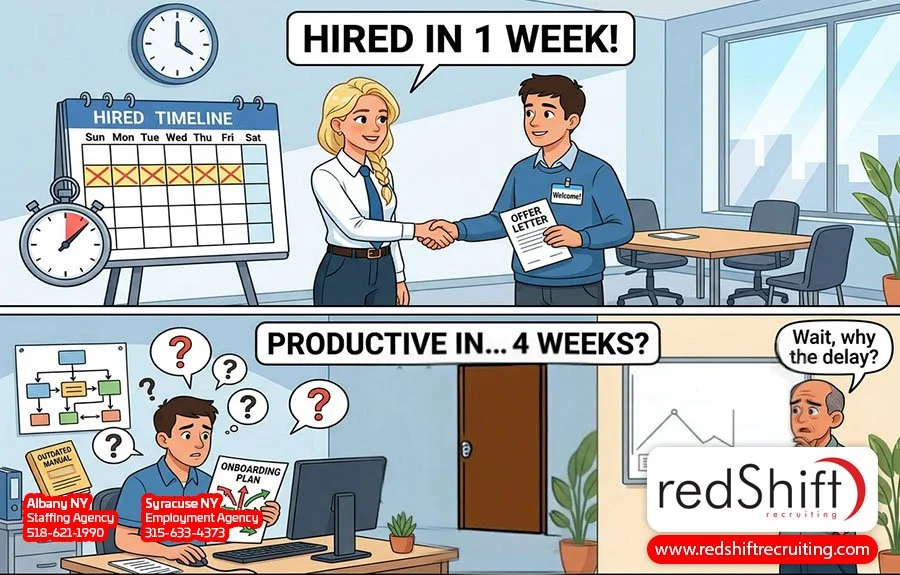
Seasonal employee onboarding is one of the most overlooked parts of the seasonal hiring process. When time is tight and the busy season is already approaching, it's tempting to get new hires on the floor as fast as possible and let them figure out the rest. But without a clear onboarding process, even capable workers spend their first days navigating basics instead of contributing—and that costs more than most employers realize. The real measure isn't time-to-hire; it's time-to-productivity.
Whether you're managing a summer retail floor, a hospitality operation, a warehouse running at peak capacity, or an office team stretched thin by vacation coverage, the underlying challenge is the same: when seasonal employees aren't integrated quickly and effectively, they become overhead rather than capacity, adding pressure to permanent employees during the periods when everyone is already stretched. Organizations that consistently get value from their seasonal workforce treat onboarding, integration, and day-to-day management as deliberate practices, not things to figure out once people are already in the door.
Why Seasonal Onboarding Requires a Different Approach
Standard employee onboarding is designed with time built in. It assumes new hires have weeks to absorb company culture, learn systems, ask questions, and gradually take on more responsibility. That model works reasonably well for permanent hires, but it doesn't translate to a seasonal workforce brought in specifically for peak periods.
The math is straightforward: if your onboarding takes two weeks and the role lasts eight, you've lost 25% of your available productivity before the person is fully functional. The solution isn't to cut corners on training; it's to change the scope of it. Seasonal workers don't need the same breadth of onboarding that a long-term hire does. What they need is the essential information to do their specific job well, delivered clearly and efficiently. The difference isn't speed—it's focus.
The two most common mistakes pull in opposite directions. Some organizations run seasonal staff through the same onboarding experience as full-time hires, covering long-term context, company history, and policies that simply don't apply to a 12-week role. Others skip structure entirely, assuming temporary employees will piece it together on their own. Both approaches create the same problem: confusion, slower ramp-up, strained team dynamics, and unnecessary administrative overhead. A seasonal employee who spends their first shift figuring out who to ask, where things are, and what they're actually supposed to be doing isn't just unproductive; they're likely to come back the next day feeling uncertain about whether the job is even worth it.
Effective seasonal onboarding is intentional. It prioritizes clarity over completeness, giving new hires exactly what they need to contribute, and not much else. In practice, that means clear job duties and performance expectations from day one, immediate access to the right tools and digital systems, a designated point of contact or buddy system for questions, and initial training built around real tasks rather than hypothetical ones. Early wins matter too, as building confidence in the first few days goes a long way toward setting the tone for the rest of the season. When the onboarding process is structured well, seasonal staff can genuinely hit the ground running, and that makes for a more manageable and more successful busy season for everyone.

How to Get Seasonal Employees Productive Quickly
The biggest reason new seasonal employees struggle isn't skills or motivation, but rather clarity. They're capable of doing the job; what slows them down is not knowing exactly what work they own, who to go to with questions, or what a good day actually looks like. When employers either overwhelm workers with information that isn't relevant to their role or provide too little structure to orient them, the result is the same: a longer learning curve and lost productivity that the organization can't afford during peak seasons. In many cases, that gap gets filled by permanent staff, who end up informally training new hires while trying to manage their own responsibilities, slowing down both employees instead of increasing capacity.
Onboarding seasonal employees effectively means giving them a focused, practical start, not necessarily a comprehensive one. New employees need clearly defined job duties, decision-making boundaries, and a simple picture of how work actually flows around them. For example, a retail associate needs to know how to process transactions, restock inventory, and handle common customer questions—not inventory forecasting or merchandising strategy. Keeping it that focused isn't cutting corners; it's respecting the timeline. A designated point of contact or buddy system, access to the right tools, and a written role scope reduce guesswork and early mistakes without requiring a significant time investment from supervisors and experienced workers.
Notably, the permanent team matters here more than most employers realize. Without clear expectations on both sides, seasonal workers either get overlooked or inadvertently pulled into the responsibilities of full-time employees, leaving them unsupported, overextended, or sidetracked from what they were actually hired to do. Taking time to introduce seasonal workers to the team, clarify how they fit into daily operations, and set boundaries around scope supports a smooth transition and helps everyone—permanent and seasonal staff alike—stay focused on their core work.
Regular check-ins in the first week or two close the gap between what was communicated in onboarding and what workers actually encounter on the job. They identify confusion early, before it becomes a pattern, and signal to seasonal workers that their experience matters. That kind of continuous support and employee engagement has a practical payoff beyond the current season: workers who feel oriented, valued, and well-managed are significantly more likely to return. And returning workers—already familiar with your systems, team, and expectations—are one of the most underused assets in seasonal talent pools. Investing in their experience now is one of the most straightforward ways to make future seasons easier.
How to Manage Seasonal Employees Throughout the Engagement
An effective onboarding experience is one of the main differences between a seasonal workforce that adds real capacity and one that creates extra work, but onboarding doesn't end after the first shift. Managing new workers well through a busy season or the holiday rush requires consistent attention across three distinct phases, each with its own pressure points.
The first week carries the most risk. Confusion, frustration, and early turnover are most likely during this window, and problems that aren't addressed quickly rarely resolve on their own. A warm welcome, clear direction, and frequent scheduled check-ins in the first week go a long way, both to reinforce expectations and to catch gaps in understanding before they become patterns. Seasonal workers who feel supported early are significantly more likely to stay engaged through the rest of the season.
Mid-season is where consistency matters most. Once the formal onboarding period ends, it's easy for structure to quietly erode. Scope creep is a common culprit—seasonal staff gradually absorbing responsibilities meant for full-time employees or stepping in to cover gaps outside of their original job description. Some flexibility is inevitable, but without clear boundaries, accountability starts to blur and workloads become unmanageable. Regularly reinforcing job scope and checking in on workload balance keeps things from drifting in ways that are harder to correct the longer they go unaddressed.
The end of the season is where most employers leave value on the table. As demand slows, the instinct is to simply wind down, but this is actually the most useful moment to step back and assess. Tracking performance throughout the season, even informally through notes in your applicant tracking system, attendance records, or brief feedback conversations, gives you something concrete to work with when next season's hiring begins. It's also worth reviewing your training materials and procedures at this stage, as seasonal workers often encounter gaps in documentation or process that permanent staff work around without noticing. Gathering honest feedback from seasonal employees before they leave can identify those gaps more candidly than internal reviews tend to, simply because they have less at stake in how the answer lands.
Across all three phases, the theme is consistency—in communication, in expectations, and in how the experience is structured from one season to the next. A repeatable approach doesn't just reduce confusion and limit compliance risks; it builds a system that makes each successive season a little less chaotic than the last.
How to Identify and Retain Top Seasonal Employees
Strong seasonal hires are one of the most underused resources in workforce planning, not because they're hard to identify, but because the pace of seasonal work makes it easy to let tracking slide until the moment has passed. During peak demand, performance documentation falls behind, and end-of-season decisions default to memory rather than anything concrete. Add in a lingering tendency to treat temporary roles as inherently disposable, and the result is a missed opportunity that repeats itself every peak period or holiday season.
You don't need a complex system to track who's worth bringing back, but you do need a consistent one. A few strong signals tell you most of what you need to know: reliability, adaptability, how someone handles ambiguity without constant direction, and how they interact with the permanent team. The workers who stand out are usually the ones who show up consistently, stay within their scope, and contribute without needing to be managed closely. Simple documentation tied to employee data, such as brief performance notes, time tracking records, and attendance, gives HR leaders the resources they need to make data-based decisions rather than rebuilding from memory or starting from scratch.
The case for bringing strong performers back is straightforward. Returning workers already know your systems, your team, and your expectations, which means faster ramp-up, reduced operational costs, and more consistent performance during the periods when consistency matters most. That reliability tends to show up in improved customer satisfaction and, in customer-facing roles, in increased sales during peak periods. A returning seasonal worker has little to no ramp-up time and significantly lower hiring costs, making them one of the most efficient ways to build reliable coverage during peak periods. Additionally, employee satisfaction can be its own form of advertisement, as seasonal workers who had a genuinely positive experience often become natural brand ambassadors, either by returning next season or by recommending the role to people in their network before you've posted a single listing. The alternative is a competitive advantage quietly left on the table, replaced by the burden of re-hiring from scratch, re-running onboarding, and re-absorbing the disruption your team already absorbed the season before.
Seasonal roles are also one of the lowest-risk ways to evaluate potential long-term hires. Instead of relying on resumes and interviews, you're watching someone perform in real conditions under real pressure. The seasonal worker who handles the holiday rush with reliability and a good attitude is showing you exactly what a permanent employee would look like—and that's information no interview process reliably produces.
None of this requires a dramatic shift in how you approach seasonal hiring, but it requires treating it as a process worth paying attention to all the way through. Employers who build even a basic system around performance tracking, re-engagement, and conversion decisions find that their seasonal workforce becomes more reliable and less costly with each passing year. The groundwork you lay this summer is what will make next summer easier.
Looking to build a stronger seasonal hiring strategy?
A good staffing partner does more than fill roles—they help you identify high performers, maintain a consistent pipeline across seasons, and avoid the cost of starting over each year. If you want to stop leaving your best seasonal workers to chance, we can help.
👉 Build Your Seasonal Hiring Strategy 👉 Build Your Seasonal Hiring Strategy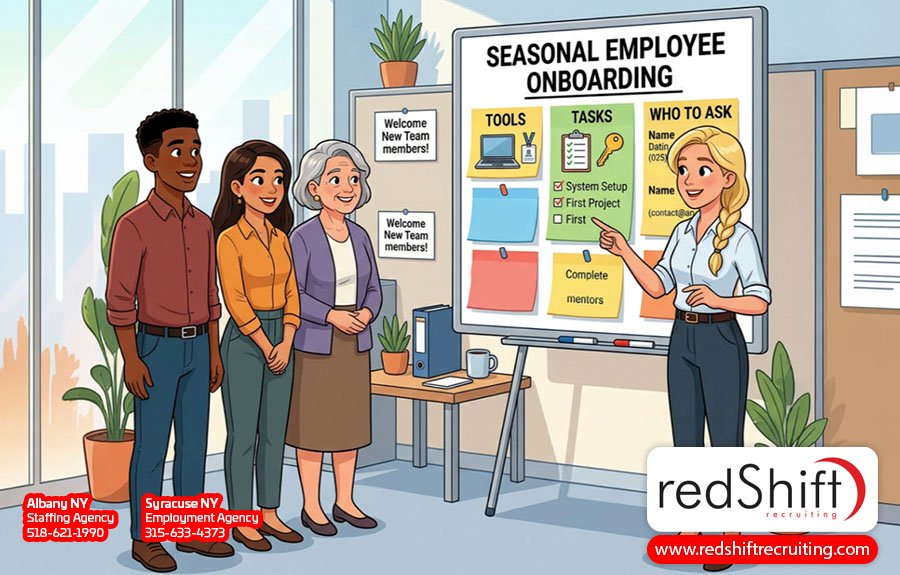
Frequently Asked Questions
What’s the Difference Between Onboarding a Seasonal Employee and a Temporary Contractor?
The core difference comes down to integration and responsibility. Seasonal employees are part of your internal team for the duration of their engagement, so onboarding focuses on job-specific training, team introductions, and alignment with internal expectations, including company policies, workflows, and day-to-day norms. Temporary contractors typically operate more independently and may come with their own tools, processes, and working arrangements that don't require the same level of internal integration. For HR professionals, the distinction also has compliance implications: classification, background checks, and regulatory requirements can differ meaningfully between the two, and getting that wrong creates liability that outlasts the engagement.
How Long Should Onboarding Take for a Seasonal Employee?
For most seasonal roles, onboarding should be measured in days, not weeks. The goal isn't to replicate a full onboarding experience; it's to deliver the critical information needed to perform the job safely and effectively within a limited time. That means role expectations, key workflows, and anything tied to safety protocols, company policies, or regulatory requirements. For managers and HR leaders, the focus should be on faster time to productivity, not completeness. Practical steps like pre-boarding paperwork, automated provisioning of tools and system access, and early task-based training help new hires contribute quickly without sacrificing the basics that matter most.
How Do You Keep Seasonal Workers Engaged in a Short-Term Role?
Engagement in a short-term role comes down to clarity, support, and momentum. Seasonal workers are more engaged when they understand what's expected of them, feel supported by the people around them, and can see that their contribution matters, especially during high-pressure periods like the summer or holiday season. Regular check-ins and clear, timely feedback support both performance and employee well-being, which tend to move together in high-pressure seasonal roles. It's a delicate balance between providing enough structure and support to keep workers aligned and confident without overcomplicating a role that was designed to be straightforward.
When Should You Convert a Seasonal Employee to a Permanent Role?
Conversion decisions should be based on observed performance, not just availability or timing. Seasonal roles give employers something no interview process reliably produces: a real-world view of how someone works under pressure, handles responsibility, adapts to changing conditions, and contributes to the team dynamic. Employees who perform consistently, integrate smoothly, and require minimal oversight are often a great asset as permanent hires. Strong hiring practices include documenting performance throughout the season and identifying strong candidates early, so the conversation doesn't have to happen in the final rushed days of a busy period.
Of course, not every seasonal worker is looking for a permanent position—some are students, career-changers, or people who simply prefer flexible or temporary work. However, by maintaining a clear enough picture of who your standout workers are, you'll be prepared to have a conversation when there's mutual interest.
How Do You Build a Pipeline of Returning Seasonal Workers?
The foundation is simple tracking: notes, performance feedback, and a basic audit trail tied to employee data. For organizations managing multiple locations, even a shared spreadsheet or notes in your applicant tracking system makes it significantly easier to identify and re-engage top performers across the board, rather than each location restarting from scratch. Rehiring experienced workers reduces onboarding time, improves consistency, and builds the kind of team familiarity that's difficult to recreate with an entirely new group every season. Over time, a deliberate re-engagement process turns what most employers treat as a one-time transaction into a reliable, self-reinforcing pipeline.
Conclusion: Structure Is the Strategy
Seasonal hiring is often treated as a short-term scramble—something to get through rather than get right. But the way you approach it has longer-term consequences than many employers account for. In a compressed window, especially during a holiday or peak season, the difference between a seasonal hire who adds real capacity and one who creates friction frequently comes down to structure: clear expectations, focused onboarding, consistent management, and basic tracking that carries forward from one season to the next.
When approached as a continuous process rather than a reactive one, seasonal hiring stops feeling like a recurring problem and starts functioning like a genuine operational asset. Automated provisioning, streamlined background checks, and consistent documentation reduce the administrative drag that makes scaling difficult, especially across multiple locations. Returning workers who already know your systems and your team create stability that new hires simply can't replicate until well into the season. And temporary employees who are well-supported and genuinely valued have a way of becoming some of the most reliable contributors in your pipeline—and occasionally, your next best permanent hire.


Article Author:
Ashley Meyer
Digital Marketing Strategist
Albany, NY
from Career Blog: Resources for Building a Career - redShift Recruiting https://www.redshiftrecruiting.com/career-blog/seasonal-employee-onboarding
via redShift Recruiting



Comments
Post a Comment