How a Labor Shortage Reshapes Modern Hiring Challenges

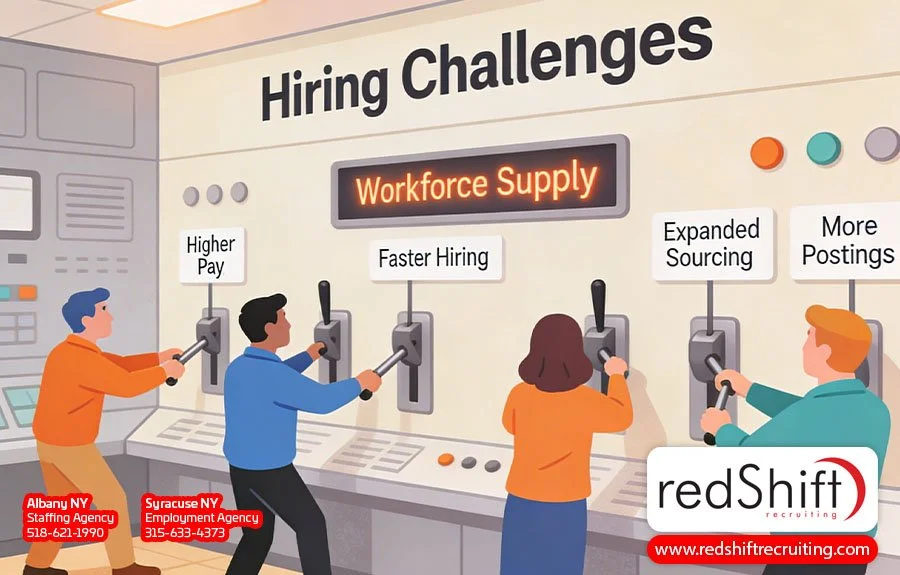
Does it feel like recruiting has become a treadmill? Hiring managers are running faster, working harder, and investing more—but they're still struggling to make any real progress on the staffing shortage. They've raised wages, accelerated hiring timelines, and expanded candidate pools. They've posted more roles, offered bigger sign-on bonuses, and built entire teams around continuous recruitment. And yet, positions remain open, turnover stays high, and the same roles cycle through the hiring pipeline again and again.
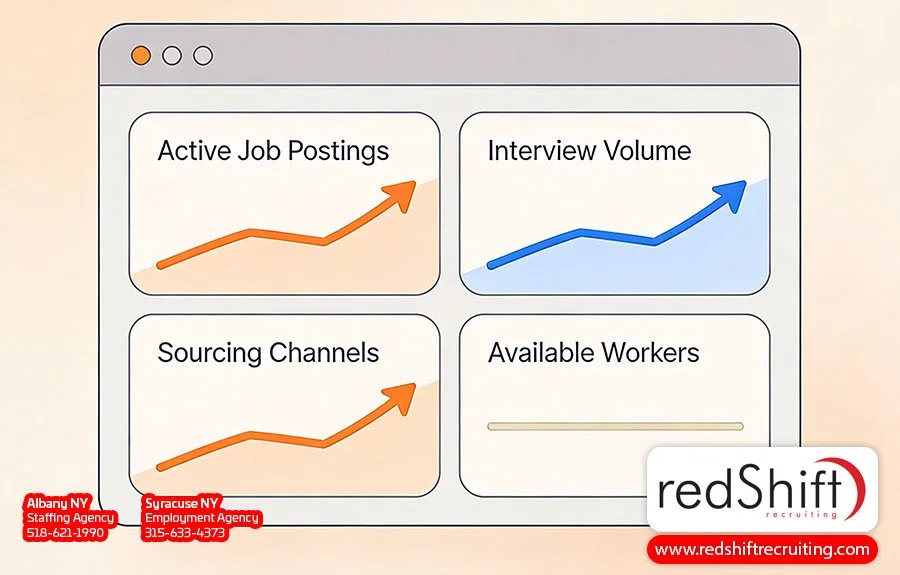
In tight labor markets, individual wins often just shuffle workers around. Faster hiring improves your conversion rate, but it doesn't create more qualified candidates to convert. Higher wages attract stronger candidates, but they don't expand the total number available. Companies see real results from these efforts: better hires, faster fills, reduced vacancy rates. But across the market as a whole, the gap persists.
This isn't about companies failing to adapt. But when every organization in a market raises wages, speeds up hiring, and broadens sourcing at the same time, those strategies stop being advantages and become simply table stakes. Hiring challenges that once seemed tactical—how quickly can we move candidates? How competitive is our pay?—have turned structural. The strategies themselves still work, but they're working within a system that's hit capacity.
This article examines why the most common employer responses to hiring challenges work locally but can't close the gap systemwide. It's not about effort; it's about capacity. And understanding that distinction changes what comes next.
The Expansion of Recruiting Activity in a Tight Labor Market
The hiring market has changed. Roles that once opened occasionally remain active year-round, and new job postings appear before earlier searches close. HR teams are posting more roles at once and sourcing candidates from a wider range of channels. Remote hiring opens geographic boundaries, and recruiters actively engage both current job seekers and passive candidates. Many HR professionals are trying to remove friction from the hiring process, cutting unnecessary steps and automating high-volume tasks while still keeping the candidate experience intact.
But even with these adjustments, the labor market remains tight. Recruiting stops being an as-needed event and becomes a constant cycle of searching, hiring, separation, and starting again. Finding qualified talent for specialized roles is getting harder, and in a world where AI can tailor every resume to mirror the job requirements, separating genuine experience from well-matched language makes confident hiring decisions harder than ever.
We see this shift across a wide range of industries, from healthcare systems and manufacturers to logistics providers and service organizations. Specialized roles, executive careers, DDD jobs, and support positions all feel the strain. When the same adjustments are happening across the market at once, they stop being a competitive advantage and start becoming the baseline. That kind of consistency signals a broader market shift rather than a problem with any one employer's hiring practices or talent acquisition strategy.
That doesn’t mean employers’ response to modern hiring challenges is without value. Expanding sourcing efforts into broader markets can support a more diverse workforce, stronger compensation packages help companies attract attention in a competitive environment, and a faster, more transparent process improves acceptance rates and the likelihood of successful hires. These changes help organizations compete more effectively for top talent.
But they operate within a fixed boundary. In a hiring environment shaped by a long-term talent shortage, more activity improves access to people—it doesn’t change the underlying issue.
The Offer Package as a Competitive Lever to Attract and Retain Talent
To remain competitive, many organizations have focused on improving the job offer through higher salaries, sign-on bonuses and shift differentials, better benefits, and flexible work arrangements. Compensation remains one of the top concerns for job seekers when considering offers, and rising cost of living, new minimum wage requirements, and changing candidate expectations continue to shape the labor market. Strong benefits packages and clearer paths for career growth can all make a company more attractive to skilled professionals. These elements signal the value of the work and help organizations compete for qualified candidates when talent shortages persist. For roles tied to high-priority projects or requiring specialized expertise, stronger offers are often the only way to retain talent in a competitive market.
These talent acquisition strategies can still be effective for individual employers, but at a broader level they don’t resolve the underlying imbalance between demand for work and the people available to do it. One role gets filled, but another open position appears somewhere else. The existing workforce is simply redistributed across the same set of roles, and HR teams still struggle to find candidates with the specialized skills and experience needed to support innovation and keep critical work moving forward. Business leaders can maintain productivity in the short term, but the pressure on teams and timelines remains.
Instead, the continuous effort to attract and retain skilled talent creates a cycle of escalation between employers. One organization raises pay to stay competitive, another enhances benefits or introduces flexibility, and others follow suit to avoid falling behind. As these changes spread across the market, what once set an employer apart becomes the minimum expectation. The advantage narrows to timing, brand, or work environment—often putting smaller organizations under greater pressure to compete with larger, better-resourced corporations.
None of this makes competitive pay or strong benefits less important. Both are essential for fairness, stability, and aligning roles with market realities. But they have a structural limit as a solution to talent shortages. They influence who accepts an offer and where people choose to work; they do not expand the available workforce.
Speed as a Strategy—and Its Limits
Speed is another practical response to ongoing recruitment challenges. The longer a role stays open, the harder it is to keep projects on track and avoid straining your existing employees. This doesn't mean cutting corners or rushing the process, which often ends in costly bad hires. Rather, it means removing points of friction so hiring teams can stay focused, communicate clearly, and make confident decisions. In an efficient recruitment process, interview cycles that once stretched for weeks are compressed into days, decisions happen faster, offers go out sooner, and candidates move from first conversation to start date with as little delay as possible.
Streamlining these steps creates a more effective hiring process that reduces drop-off between stages, keeps qualified candidates engaged, and supports a strong employer brand that attracts specialized talent. In roles that require in-demand technical skills, speed often determines whether a candidate stays in the process at all. These professionals are rarely evaluating a single opportunity. When timelines drag or communication breaks down, they move on—not because they weren't interested, but because another employer made it easier to say yes.
That sense of urgency also changes how hiring decisions are made. Familiarity with current conditions and labor statistics data helps organizations move with confidence, avoiding unrealistic expectations that slow the process or produce uncompetitive offers. Without that grounding, human resources managers can fall into the pattern of “just one more round” in search of a perfect match, only to lose qualified talent that was ready to accept a good offer. When job seekers are weighing multiple options, timing matters at every stage. Hiring practices that respect a candidate’s time and provide clarity at each step build trust and improve the likelihood that job offers turn into successful new hires.
There are limits, however, to what speed alone can accomplish. A shorter process can improve conversion rates; it doesn’t create more people with the right skills. Instead, the same talent pool moves through the system more quickly while underlying skills gaps remain. As more organizations adopt streamlined recruitment strategies, moving fast stops being a differentiator and becomes necessary just to keep up. Candidates come to anticipate quicker responses, fewer steps, and faster decisions, and any process that moves slowly risks losing momentum. Speed remains essential for maintaining a positive employer brand and reducing the risk of losing qualified applicants—but it primarily meets candidate expectations rather than resolving the underlying issue. Hiring faster doesn’t solve a skilled talent shortage; it determines who reaches the available talent first.
Expanding the Talent Pool and Revaluating Job Descriptions
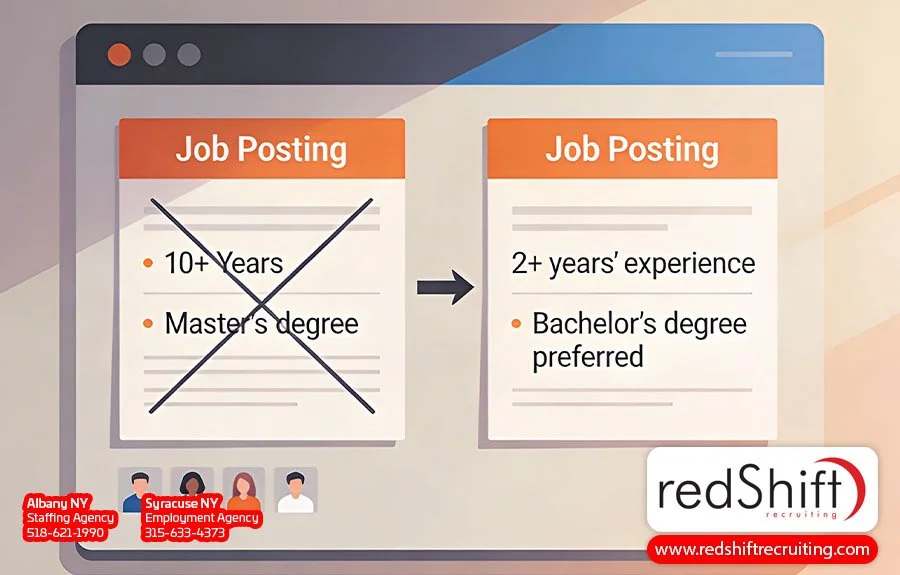
When faster processes and stronger offers aren’t enough, many savvy hiring managers start by looking inward. They revisit their hiring strategy, rethink job descriptions, and question whether every requirement truly needs to be there—especially when roles remain open for months under the original criteria. Do candidates need to check all the boxes? Is direct industry experience essential, or could adjacent experience translate? Is a bachelor's degree necessary, or is a certification and equivalent experience acceptable? Are we screening out capable applicants because we’ve defined the role too narrowly?
In some cases, the answer is yes. Broadening experience profiles, considering candidates with adjacent experience, or reevaluating credential requirements can open the door to top talent that might otherwise be filtered out by rigid qualification demands. Organizations that are open to exploring hybrid roles, transferable skill sets, and non-linear career journeys often find capable candidates in places they weren't looking before, from related industries to entirely new candidate segments. Some are pairing this shift with training programs that allow temporary workers to demonstrate their abilities in real working conditions and move into permanent roles once both sides are confident in the fit. Used thoughtfully, this approach reduces the risk of skill mismatches and helps ensure everyone is on the same page before a long-term offer is made.
This shift also changes how potential is evaluated. Candidates who may not match conventional education or experience requirements can show curiosity, adaptability, and a strong alignment with the company culture. The right candidates aren’t always the ones with the most familiar titles or the most linear career paths. In a market where roles evolve quickly, the ability to learn, solve problems, and apply core strengths in new contexts often matters more than a perfect match to outdated expectations. These adjustments can expand access and create more entry points for both employers and workers, reducing unnecessary barriers in the hiring process and limiting the influence of unconscious biases that may have shaped earlier criteria.
But here, too, there are limits. As more organizations widen their criteria at the same time, they begin drawing from many of the same overlapping groups. A candidate who once would have been considered a stretch for one industry is now being pursued by several. What feels like a larger market is often the same set of people being approached from more directions. Like higher pay or faster processes, this approach still operates within the boundaries of the existing labor market.
The Shift from Episodic Hiring to Continuous Replacement
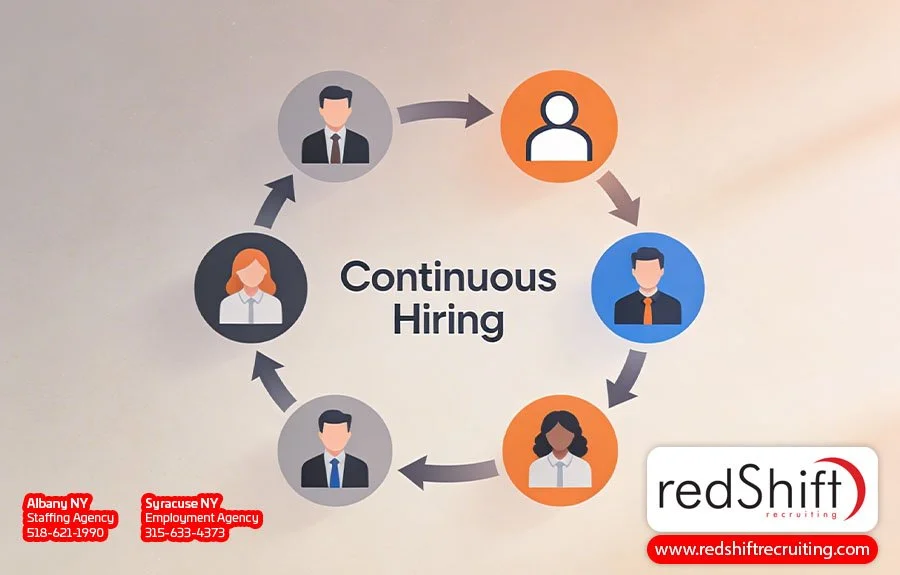
For many organizations, hiring no longer happens in waves tied to expansion. Instead, it's become a constant effort to maintain existing staffing levels. Roles are filled, reopened, and filled again. Succession planning stalls, retention rates decline, and leaders work to remain business-forward in an environment where the focus is continually on talent acquisition and new hires rather than long-term growth.
This doesn't always take the form of dramatic resignations or paralyzing skills gaps. The signs are often more practical. The same positions appear in the recruiting queue quarter after quarter, even outside of seasonal peaks or planned expansions. New employees move through onboarding and training programs while hiring managers plan a new hiring strategy for expected vacancies. In frontline environments, this scenario creates a steady cycle of onboarding, handoff, and restart that runs parallel to day-to-day operations, sidetracking planned initiatives and pulling time and attention away from business goals and high-priority projects.
This shift changes talent acquisition strategies from supporting expansion or creating new growth opportunities to simply keeping critical roles filled. Net headcount may stay flat even as recruiting activity remains high, and as the same roles must be refilled again and again, hiring becomes less about building for the future and more about sustaining the present.
A pattern of continuous hiring can indicate a system that is struggling to hold equilibrium. The work is still getting done, but only through ongoing replacement efforts rather than net growth. Stability depends on how quickly roles are refilled, not on how long they stay filled. Over time, that constant reset can slow the accumulation of institutional knowledge, reduce continuity for clients and internal teams, and make sustained progress harder to maintain. It can also gradually weaken workplace culture as permanent employees lose the consistency and camaraderie that maintains morale and supports an effective team.
That doesn’t mean these efforts lack value. Consistent recruiting supports continuity, keeps teams staffed, and allows organizations to stay focused on current priorities even when conditions are tight. But the underlying dynamic is different from a growth cycle. When hiring becomes continuous, it reflects an environment where maintaining staffing levels requires the same level of attention that expansion once did. The consequence is that recruiting becomes a function of preservation rather than progress—a signal of structural constraint rather than a temporary gap.
Why These Hiring Strategies Still Matter—But Can’t Fully Close the Gap
None of this makes the strategies themselves misguided. Faster processes, stronger offers, broader criteria, and continuous recruiting are rational responses to real pressure. They help organizations stay staffed, keep work moving, protect service levels, and reduce day-to-day disruption in the short term. In many cases, they also create better alignment between employers and candidates through effective communication, clarifying expectations, and improved transparency.
These approaches also open doors that didn’t exist before. Partnerships with community colleges and programs, targeted training opportunities, and more transparent hiring practices make roles more accessible and help employers connect with people who were previously overlooked. At the organizational level, those changes improve fill rates, strengthen acceptance decisions, and create stability in an otherwise tight market.
The tension appears at the system level. When one employer moves faster, raises pay, or broadens requirements, it gains an advantage. When every employer adopts the same adjustments at the same time, those gains level out. What felt like a differentiator becomes the new baseline, and the underlying constraint becomes easier to see.
That distinction is critical for maintaining trust in the conversation. The core issue isn’t that organizations are using the wrong playbook, but that the playbook is being run everywhere at once. These strategies still produce meaningful local wins, but they can’t, on their own, fully close the labor gap.
Seeing This In Your Own Hiring Cycle?
This often shows up as roles that never quite come off the job board, searches that restart as soon as they close, or hiring plans that focus more on maintaining coverage than supporting growth. Many organizations are improving their hiring process and still running into the same limits. If that sounds familiar, it may be time to step back and look at whether the challenge is tactical—or structural.
Frequently Asked Questions
What’s the Difference Between a Recruiting Problem and a Capacity Problem?
A recruiting problem means there are issues in the recruitment process that affect an employer's ability to attract and retain skilled talent. This could be due to an inefficient hiring process, pay disparity, unrealistic expectations, limited sourcing channels, or poor communication. A capacity problem means recruitment challenges are the result of a shortage of available labor. Designing a more effective hiring process, strengthening offers, providing growth opportunities, and closing communication gaps can improve individual outcomes, but they won’t change the overall result if a labor shortage is the root of the problem.
That’s why roles can remain open across multiple organizations at the same time. The strategies are working locally, they just aren’t increasing the total number of people available to be hired.
Why Do the Same Roles Keep Reappearing After They’re Filled?
When positions reopen again and again, it usually reflects a stability issue rather than a sourcing issue. The role is being filled, but it’s not staying filled. This constant cycle of job postings, onboarding, and backfilling funnels hiring managers’ and HR professionals’ time and energy away from high-value projects and long-term business goals, damaging company culture and employer brand. Over time, it can slow knowledge transfer, disrupt succession planning, and make it harder to build experienced, cohesive teams.
These roles often reappear because of ongoing skill mismatches between job requirements and available skill sets, or because the right candidates are accepting offers elsewhere in a competitive market. In some cases, the original job description no longer reflects how the work has evolved, leaving open positions that are technically filled, but not in a way that creates long-term stability.
How Do Candidate Expectations Change in a Tight Labor Market?
In a competitive market, business leaders must optimize their hiring process to make successful hires. Top candidates may be evaluating multiple options at once, so delayed feedback or unclear steps signal risk, and many don’t have time to wait for an uncertain decision. Organizations that invest in effective communication, realistic timelines, and visible career paths are more likely to convert interest into accepted offers.
However, as more companies adjust their recruitment strategies, candidates also adjust their expectations. Clarity, speed, and transparency become the standard—not differentiators—and the experience itself becomes part of how candidates assess stability, leadership, and long-term fit.
How Does a Labor Shortage Change the Role of Hiring Managers?
In a labor shortage, hiring managers spend less time hiring for growth and more time hiring to maintain coverage. That shifts the focus toward faster decisions, clearer role definition, and closer partnership with human resources managers and recruiting teams. At the same time, managers often have less time to support the development of the existing workforce through meaningful performance reviews and structured training opportunities because so much of their attention is directed toward onboarding and securing new hires.
It also increases the importance of accurate workforce planning, from early collaboration with community colleges and vocational schools to identifying internal training opportunities that reduce repeated external searches. The role becomes less about selecting from a large slate of candidates and more about making confident hiring decisions in a constrained environment.
Why Are Employers Rethinking Traditional Job Descriptions?
Rigid role definitions were built for a labor market where replacement talent was easier to find. In a tighter environment, overly narrow requirements demanding specific education or specialized expertise can screen out capable people who could succeed with the right support.
Revisiting job scope, focusing on core capabilities, and using tools like project-based evaluations or employee testimonials to show what success actually looks like helps attract candidates who might not match a legacy template but can grow into the role. That shift expands access without lowering standards and allows organizations to align open positions with the work that actually needs to be done today.
Conclusion: From Recruiting Problem to Capacity Constraint
Modern hiring challenges aren’t the result of inaction or poor strategy. Employers are refining their hiring process, adjusting job descriptions, strengthening offers, and moving faster than ever. Many of these efforts produce real wins: stronger alignment, better conversion rates, and more successful hires. But when demand for labor outpaces supply across the entire labor market, even well-designed recruitment strategies operate within structural limits. The issue isn’t effort. It’s capacity.
And capacity constraints don’t stop at open positions. When hiring becomes a continuous effort to maintain equilibrium, the pressure shifts elsewhere. In the next article, we’ll examine what this constant replacement cycle does to the leaders and teams responsible for keeping operations moving—and why leadership strain is often the next visible signal of a system operating at its limits.

Article Author:
Ashley Meyer
Digital Marketing Strategist
Albany, NY
from Career Blog: Resources for Building a Career - redShift Recruiting https://www.redshiftrecruiting.com/career-blog/hiring-challenges
via redShift Recruiting



Comments
Post a Comment