AI and Entry Level Jobs: How Early-Career Roles Are Being Redefined
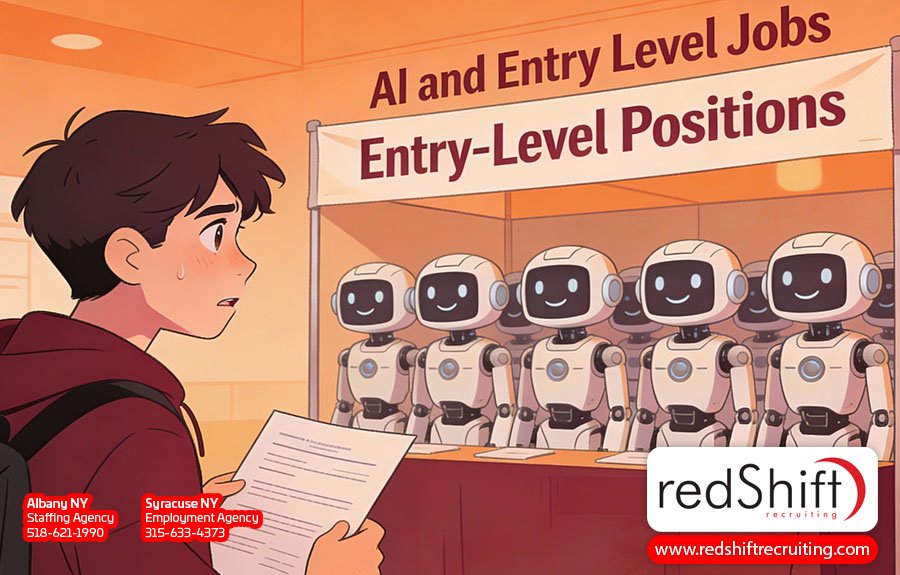
Not long ago, an entry-level job meant learning as you went. Employers expected new hires to ramp up slowly, ask questions, make a few mistakes, and grow into the role. But as advances in AI and automation accelerate, the definition of “entry-level” has quietly changed. Today, AI and entry-level jobs are becoming inseparable, reshaping what early-career work looks like and what employers expect from new graduates.
AI has taken over many of the simple, repetitive tasks that once served as natural training grounds for junior employees. Instead of easing into their careers through foundational work, many early-career candidates are stepping into roles that require stronger judgment, greater adaptability, and comfort working alongside automated systems from the start. Employers feel this shift too: they need talent who can operate in more complex workflows, but they’re also struggling to define what a modern entry-level role should even look like.
In this article, we’ll unpack how AI is reshaping early-career work, why companies are finding it harder to hire junior talent, which skills matter most in today’s market, and how both employers and job seekers can adapt. The entry-level job isn’t disappearing, but it is evolving fast. And those who understand and prepare for the change will be in a far better position to thrive.
How AI Is Changing Entry-Level Jobs
As automation advances across industries, the foundation of early-career work is shifting in ways that neither employers nor new graduates fully expected. The following are a few of the current trends.
Automation Is Reducing “Starter” Roles
Across industries, automation has absorbed many of the simple, routine tasks that once helped early-career employees build foundational skills. In accounting, AI handles reconciliations; in IT, systems triage basic tickets; in administrative roles, scheduling and inbox sorting are increasingly automated; and in legal settings, document review is now machine-assisted. These tasks didn’t just fill time—they gave entry-level workers essential context, exposure, and hands-on learning in the workplace. As they disappear, new hires are expected to contribute at a higher level from day one.
The Education–Workplace Gap Is Growing
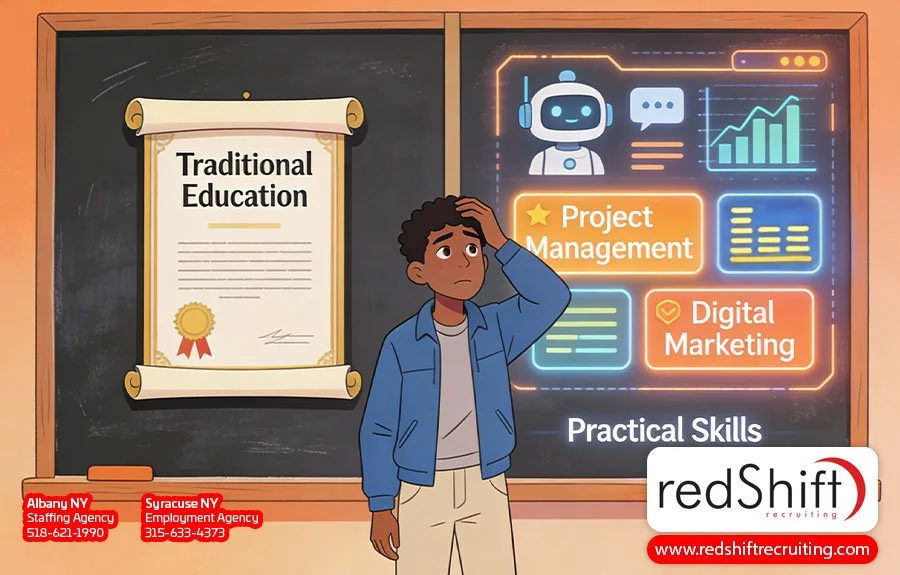
While educational institutions teach theory well, many programs haven’t kept pace with the tools and expectations shaping today’s entry-level positions. Coursework often lags behind real-world workflows, teaching concepts but not practical application. Employers increasingly search for candidates who understand how modern systems operate and how to use them in their daily work, even if they aren't directly building them. As a result, new graduates enter the job market with strong academic backgrounds but limited exposure to how organizations actually use automation and artificial intelligence (AI) tools on the job.
Adaptability Is the New Entry-Level Requirement
Automation hasn’t eliminated early-career roles, but it has shifted what they demand from junior staff. Success now depends less on mastering a specific tool and more on judgment: knowing when automated output is reliable, when to escalate, and how to work alongside AI effectively without becoming overly dependent on it. Soft skills like communication, curiosity, and critical thinking matter more than ever as junior employees navigate workflows where AI handles execution and humans handle interpretation.
Why Entry-Level Hiring Is Getting Harder
As early-career roles evolve, employers are facing a new set of challenges that make hiring junior talent more complicated than it appears.
Fewer Entry-Level Openings—but Harder Ones
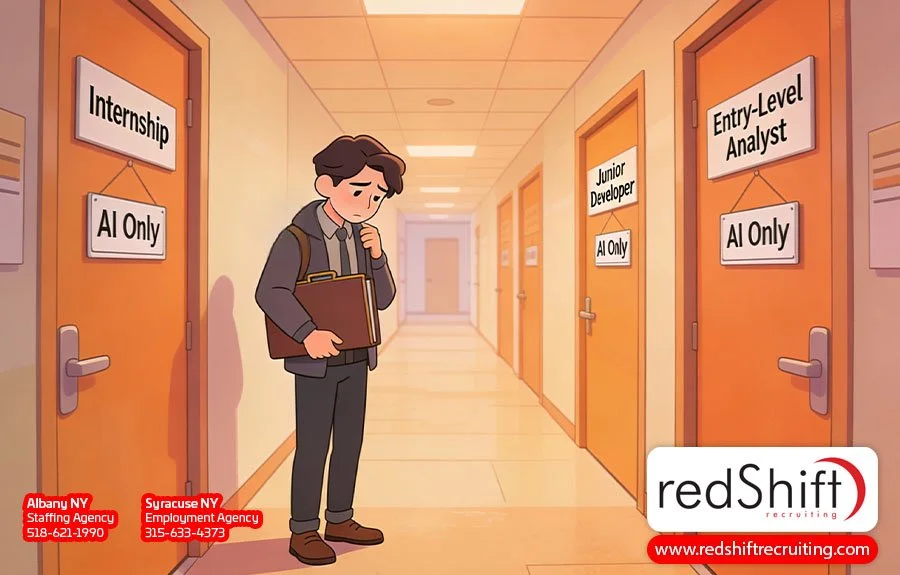
As automation handles more foundational job tasks, many organizations need fewer people in traditional entry-level roles, and the roles that do remain are more complex. AI systems streamline routine work but also increase the level of judgment required from junior employees. Without strong onboarding structures, some employers hesitate to hire recent grads who may not have had opportunities to build experience in real workflows and on-the-job practices, especially in environments where mistakes can multiply quickly through automated systems. With fewer low-risk tasks available, juniors have fewer opportunities to practice, experiment, and build judgment before taking on higher-stakes work.
The Experience Paradox Is Growing
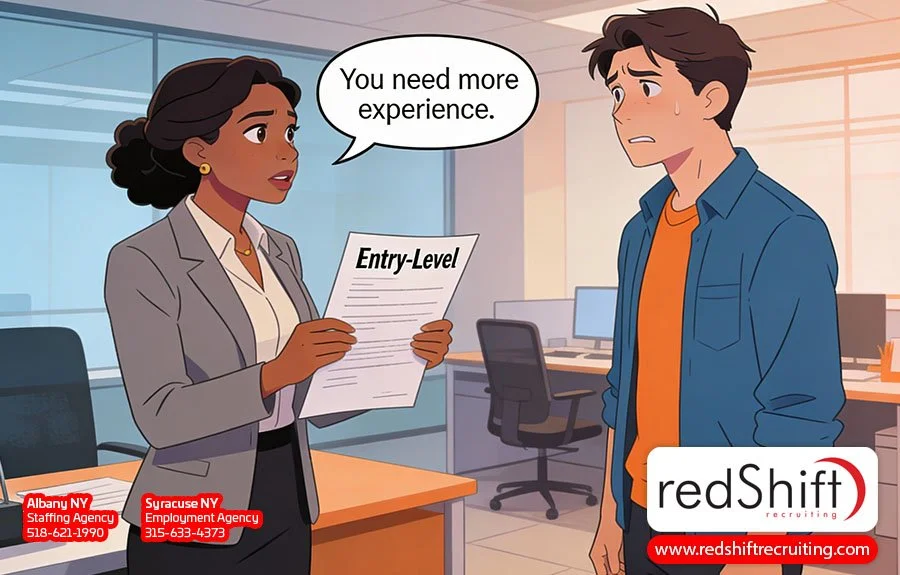
The classic challenge of needing experience to get experience has intensified with artificial intelligence technology. Employers want candidates who can contribute quickly, but recent graduates often lack exposure to modern AI-driven processes in the workplace. At the same time, easy access to generative AI tools has enabled many job seekers to produce highly polished resumes, writing samples, and even portfolio pieces. As a result, hiring teams must now evaluate both the quality of each submission and the authenticity behind it, distinguishing genuine human work from content generated by large language models. Evaluating junior talent has become less about reviewing samples and more about understanding how someone thinks, solves problems, and approaches ambiguity.
Most Companies Haven’t Adapted Early-Career Role Design
Many employers are still using job descriptions built for a different era, carrying forward outdated expectations tied to the traditional career ladder. Long before widespread AI adoption, access to online learning, changing education pathways, and skill-based hiring—especially in IT and technical roles—were already reshaping how early-career talent develops. As a result, many job requirements still emphasize narrow tool experience, multiple internships, or rigid credentials that don’t reflect how people actually gain skills today. At the same time, many teams lack structured frameworks to support junior staff in modern, technology-enabled workflows, making leaders even more hesitant to hire early-career talent. This misalignment causes employers to screen out promising candidates for roles that don’t actually require the level of specialization some job descriptions demand.
Rising Organizational Risk Makes Employers Cautious
In automated environments, early missteps can cascade quickly. Relatively small errors are quickly amplified through systems that automate tasks without significant human oversight, making employers more cautious about placing less-experienced employees into workflows where the downstream impact is harder to control. The result is a hesitancy that slows entry-level hiring even when talent is needed, creating a gap between workforce demand and employer readiness to support junior growth.
Skills Needed for Today’s Entry-Level Jobs
So what competencies should aspiring professionals focus on to stand out in today's job market? Because some entry-level work now begins at a higher level of complexity, the skills that matter most have shifted toward judgment, adaptability, and the ability to work effectively in AI-shaped environments.
AI-Adjacent Skills That Support Modern Workflows
Early-career employees don’t need to be AI experts, but they do need AI fluency—a practical understanding of what automated systems can and cannot do. Many young workers feel familiar with AI because they use generative platforms in daily life, but workplace AI requires a different skill set—one focused on judgment, oversight, and knowing when automated output should be trusted, challenged, or escalated. These aren’t technical or engineering skills—they’re practical abilities that help early-career employees navigate workflows shaped by automation. Roles across industries increasingly rely on CRM, ERP, ATS, and other platforms that incorporate automation to streamline operations, and employers expect junior hires to work confidently within the systems that shape today’s workplace.
Human + Cognitive Skills That AI Tools Can’t Replace
As automation expands, the skills that give humans an edge are the ones AI can’t easily replicate. Employers look for people who exercise strong judgment, recognize patterns, and make sound decisions when information is incomplete or ambiguous. Soft skills such as communication, collaboration, initiative, and a willingness to take ownership play a defining role in how quickly employees grow in junior roles and how effectively they contribute to organizational goals. As automation accelerates, these human strengths become the differentiators that determine who advances quickly and who struggles to keep up.
Industry-Specific Expectations
While the broader skill categories are consistent, the way they show up day-to-day varies across fields. In the tech industry, systems thinking helps early-career talent see how different tools, components, and processes fit together and affect one another. In accounting and finance, the ability to validate outputs and interpret data remains essential. Legal roles require spotting nuance that automation may miss, and administrative teams rely on strong prioritization as automated systems handle routine tasks. These capabilities help young professionals navigate the workflows shaped by technology and support long-term growth in entry-level careers.
How Employers Should Redefine Entry-Level Roles
As early-career expectations shift, companies need to rethink how they design and support junior positions. Redefining entry-level work isn’t just a hiring adjustment—it’s a long-term investment in developing future leaders and building teams that can adapt as AI adoption accelerates. Modernizing these roles begins with a few practical changes to how they are structured and supported. These include:
Remove Outdated Experience and Education Requirements
Many employers still rely on time-based requirements for roles that were historically designed to train new talent. These expectations often range from less than one year to several years of experience—the latter serving as an unreasonable bar for a job labeled entry-level. As internships and other real-world learning opportunities become more competitive and less accessible, these requirements can unintentionally screen out strong candidates before they’re ever considered.
A competency-based approach allows employers to identify applicants with the judgment, communication skills, and curiosity to succeed, even without traditional credentials. It’s increasingly common for early-career professionals in IT and related fields to build real-world capability without a formal degree in computer science or information technology, often gaining practical experience through certifications, self-directed learning, or hands-on project work. These alternative pathways can produce candidates who are just as capable—and sometimes even more adaptable—than those who follow conventional academic routes.
Reintroduce Learnable Moments
Automation may reduce repetitive work, but it also removes natural practice opportunities that once helped early-career employees build confidence. Because automated systems eliminate many of the low-risk tasks that used to teach foundational skills, employers now need to build intentional learning moments into the workflow. At the same time, the shift toward automated workflows has reduced many of the informal interactions that once taught early-career employees how to navigate workplace culture—from collaborating with colleagues and communicating professionally to building relationships and solving day-to-day problems. This makes intentional learning moments even more important. Organizations can do this through training programs that provide micro-learning, rotational exposure to different tasks, and structured opportunities to “explain the AI’s output.” These professional development opportunities reinforce deeper understanding and help transform junior employees into the future leaders companies need.
Build Safer Pathways for Junior Contribution
In automated environments, even small errors can escalate quickly, so companies must create workflows that protect both the business and less experienced employees. Guardrails for AI-assisted tasks, clear escalation paths, and mitigation strategies make it safer for juniors to participate meaningfully in high-impact work. These supports not only reduce risk—they also help teams maintain operational efficiency while giving entry-level workers space to grow.
Hire for Potential, Not Mastery
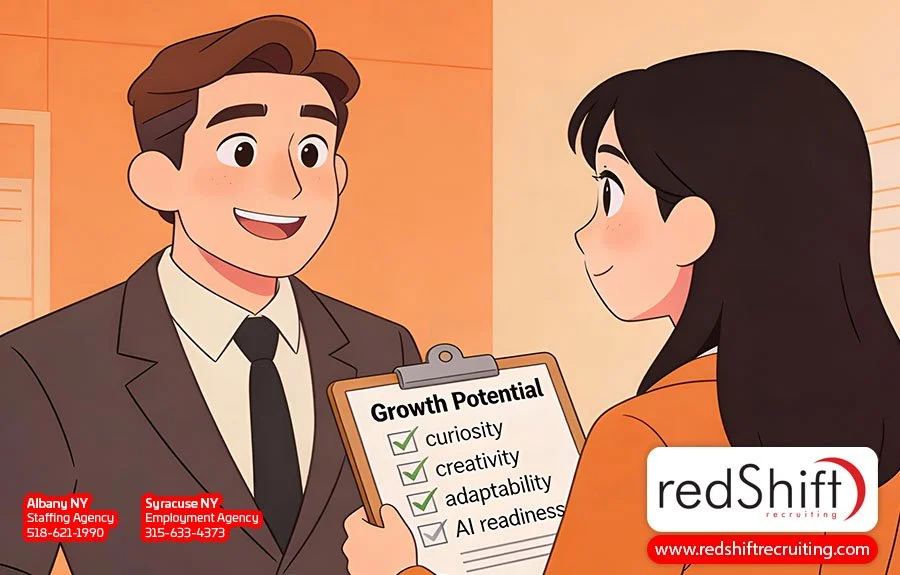
Hiring managers interviewing for early-career roles should prioritize learning core technical skills, agility, curiosity, and resilience rather than narrow tool experience. Many foundational qualities, such as pattern recognition, resourcefulness, and problem framing, cannot be taught quickly but reveal how someone will perform over time. Hiring with this mindset strengthens company culture and reinforces that redefining early-career roles isn’t only about today’s staffing needs; it’s about building the internal pipeline companies will rely on as automation continues to reshape work.
How Job Seekers Can Break Into Today’s Entry-Level Market
Breaking into early-career roles requires more than showing technical ability. In a market where employers feel cautious about onboarding new talent, the strongest candidates are the ones who signal reliability, judgment, and readiness to contribute within real workflows shaped by AI tools. Because entry-level work now demands more judgment and less routine execution, your goal is to signal that you can handle complexity with care—not just produce polished results.
Focus on Market Positioning, Not Tool Usage
Many employers are hesitant to hire early-career candidates because the work has grown more complex and the margin for error has narrowed. Understanding this dynamic helps job seekers tailor their message to reduce perceived hiring risk. Instead of emphasizing which tools you’ve tried, frame your experience around how you solve problems, ask questions, and collaborate—qualities that matter across industries, from tech jobs to skilled trades and everything in between. Employers ultimately respond to signals that show you can integrate into real work, not just experiment with technology.
Build Evidence of Judgment, Not Just Output
Anyone can produce polished work with generative AI platforms, but employers want to see how you think. A short portfolio piece, case study, or project summary can go a long way if it demonstrates your decision process instead of just the finished product. Show how you verified AI-generated suggestions, compared multiple approaches, identified risks, or corrected a flawed output. This approach demonstrates practical judgment that AI can’t easily replicate and reassures employers that you’ll contribute responsibly in high-impact workflows.
Demonstrate Readiness Through Hybrid Skill Sets
Most early-career roles now blend domain knowledge, communication, and adaptability. Whether your background comes from internships, educational institutions, certifications, or hands-on learning, highlight how you plug into real workflows: how you collaborate, how you document your work, and how you escalate when something doesn’t look right. Employers care far more about your ability to learn quickly and navigate the reality of real-world work environments than about how many tools you’ve tried.
Talk About AI Experience Authentically
Vague statements like “I use AI all the time” don’t help employers and can sometimes even raise concerns. Instead, use brief, concrete examples: how you approached a task, what you asked AI to do, and how you refined the results to align with the project’s goals. These examples show maturity and responsibility, two traits that help employers feel confident investing in early-career talent.
Want deeper guidance on how AI is changing the early-career job search—especially for Gen Z entering the workforce?
Check out our companion article for practical strategies, examples, and AI-era job search tips.
Frequently Asked Questions
Are Entry-Level Jobs Actually Disappearing Because of AI?
No—entry-level jobs aren’t disappearing, but they are changing. As AI takes over routine tasks, fewer roles exist purely for learning basic execution. Instead, many entry-level positions require more judgment, collaboration, and readiness to work within AI-supported workflows. Opportunity still exists, but expectations start higher than they used to.
What Does “AI Fluency” Really Mean in a Work Setting?
AI fluency isn’t about mastering tools—it’s about understanding how AI fits into real workflows. In practice, that means knowing when AI output can be trusted, when it should be questioned, and when to escalate issues. Employers value candidates who can work responsibly with AI systems, not those who simply list tools on a resume.
How Can Job Seekers Prove Judgment Without Formal Experience?
Job seekers can demonstrate judgment by showing how they think, not just what they produce. Short case studies, project summaries, or portfolio notes that explain decisions, tradeoffs, and error-checking matter more than polished results. This approach reassures employers that the time required to onboard, train, and supervise you will be manageable.
How Can Employers Safely Give Junior Employees More Responsibility?
The key is structure. Guardrails, clear escalation paths, and defined review checkpoints allow junior employees to contribute without putting the organization at risk. When responsibility is introduced gradually, early-career talent gains confidence while employers protect quality, compliance, and outcomes.
How Can Candidates Stand Out When Everyone Uses AI Tools?
Standing out isn’t about using more AI—it’s about using it responsibly. Candidates who explain how they validated outputs, collaborated with teammates, or aligned results with business goals (whether in IT, marketing, or operations) signal maturity. Employers notice candidates who show accountability, not just efficiency.
Conclusion
Entry-level work isn’t disappearing entirely, but it is being reshaped by AI alongside broader shifts in how skills are learned, applied, and evaluated. Employers who move beyond short-sighted assumptions about experience and credentials can build stronger, more adaptable teams, while job seekers who focus on judgment, collaboration, and real-world readiness can open new paths forward. When both sides adapt, early-career work becomes a pathway to opportunity, helping organizations drive growth and expand social mobility in a changing job market.

Article Author:
Ashley Meyer
Digital Marketing Strategist
Albany, NY
from Career Blog: Resources for Building a Career - redShift Recruiting https://www.redshiftrecruiting.com/career-blog/ai-and-entry-level-jobs
via redShift Recruiting



Comments
Post a Comment